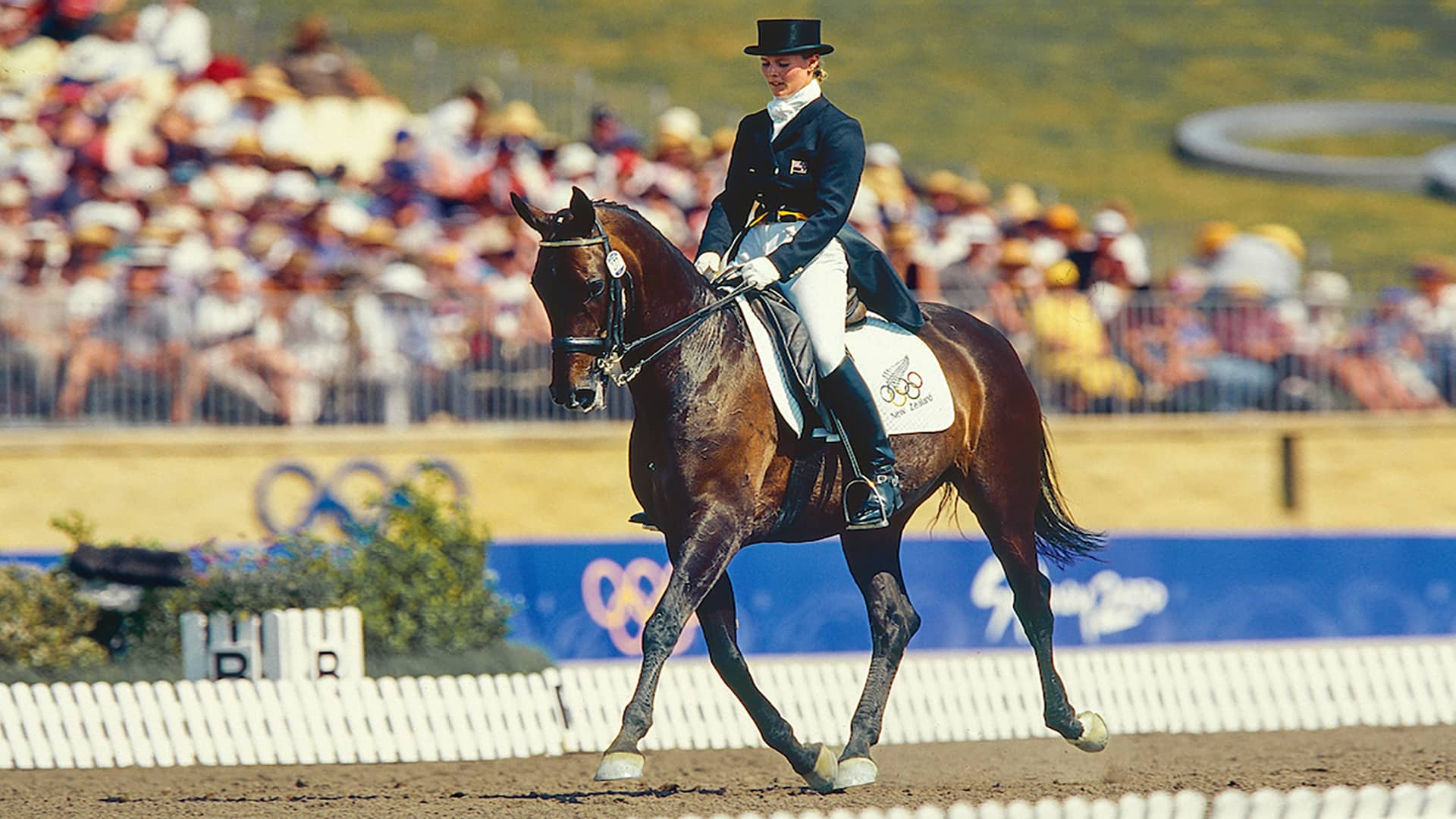
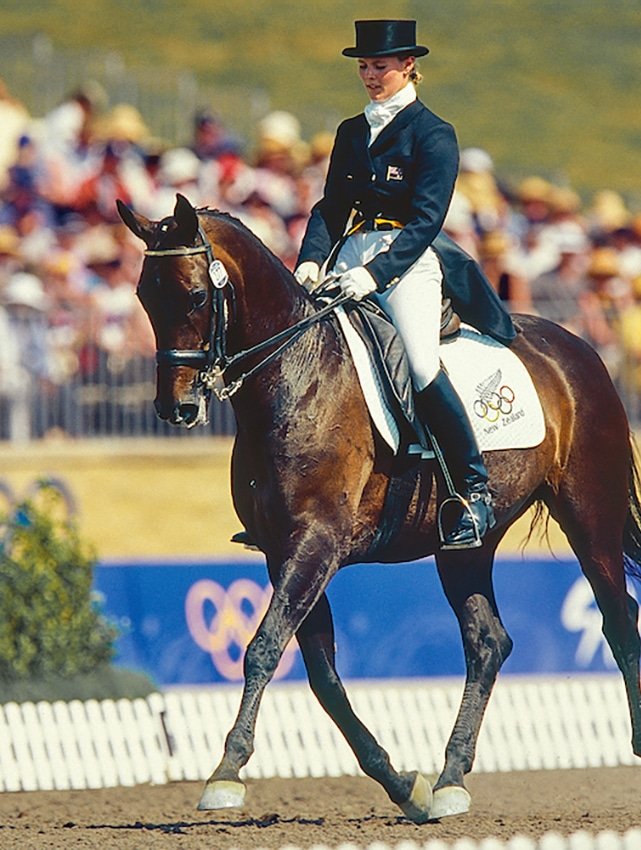
At twenty-two, Kallista Field rode her mare Waikare at the 2000 Olympic Games in Sydney. Image by Dirk Caremans/Hippo Foto.


Guest rider at the forthcoming Sydney CDI (29 April – 2 May), New Zealand’s Kallista Field brings a legacy shaped by Olympic experience, family influence, and decades of elite training reflecting her enduring pioneering roots.
In 2024 Kallista Field was inducted into the Equestrian Sports New Zealand Hall of Fame.
She had been reluctant to attend the ceremony at Rydges, Auckland. “It took my husband a month to persuade me; finally, I relented wearing the only dress I owned!
“You know it was mum Sharon who should have received that award – she deserved it so much more than I did.”
The equestrian achievements of this mother and daughter duo are unrivalled; and both are equally worthy of recognition.
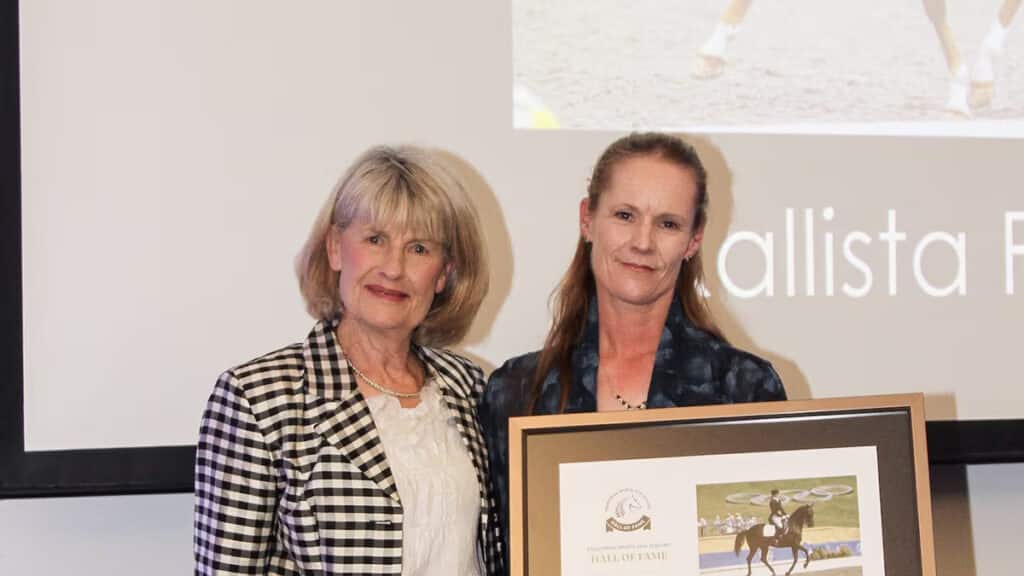
In 2024 Kallista Field was inducted into the Equestrian Sports New Zealand Hall of Fame. Image supplied.
Sharon is a true pioneer of New Zealand dressage. When the discipline was in its infancy, she trained multiple horses to Grand Prix and qualified her horse Mosaic for the 1996 Atlanta Games. This diminutive chestnut by Witzbold out of Gay Duchess, a pony mare, was subsequently purchased by Mary Hanna – taking the rider to her first international event.
The gelding died in 2014 aged thirty-one. “I can’t begin to tell you how much he did for both me and Australia in our early days of dressage,” said Mary. “Apart from starting my international career, and taking me to my first Olympics, he taught many of my young riders the ropes of the Grand Prix work.”
Clemens Dierks, speaking from Sydney, remembers the Fields when Kallista was just a kid. Before retiring from overseas engagements, this former Olympic dressage coach had given clinics for several days each month for thirty years at their Pahiatua property.
“I started off training Sharon on Silver Fern, a beautiful grey,” he recalls.
When this Grand Prix mare retired, she produced notable offspring such as the eventer Vettori by Voltaire, which competed with Stuart Tinney at the 2010 World Equestrian Games in Kentucky and at other major events.
“Then we trained Mosaic, who went on to great things,” continued Dierks. “Sharon was happy with the sale to Australia because, at that time, there wasn’t much New Zealand support for any riders anywhere.
“Later, I worked with her daughter and the Hanoverian mare Waikare.”
INSPIRING COACHES
Kallista remembers when she first saw the trainer. “I was seven. Mum was having a problem with a flying change, which was always late one way. He watched, said ‘do this, do that, and when I come back, you’ll be doing clean changes both ways’. And she was.
“When I was nine, I’d have a lesson with him if there’d been a last-minute clinic cancellation. I ended up regularly working with him every month for twenty-five years,” said Kallista, 48, from her home on New Zealand’s North Island.
And those years were enlightening and exceptionally productive.
“When I was about seventeen, Clemens arranged for me to go to Herbert Rehbein in Germany. (Rehbein sadly passed away in 1997 at just 50-years-old). At first I didn’t know where I was, but Clemens had said all would be okay as I’d be working in a good family environment at Gröhnwohldhof. I started off at the bottom rolling bandages and ended up riding Don Primero and Donnerhall!
“I was there for a year and one of the most inspirational things was seeing Rehbein on the horses. He never moved when he rode and every one he sat on moved like magic.”
YOUNG OLYMPIAN
Back in New Zealand, Kallista continued training and competing. At twenty-two, she rode her mare at the 2000 Olympic Games in Sydney. Kallista was her country’s first Olympic dressage representative.
“She did exceptionally well,” recalls Clemens.
Equestrian journalists from around the globe reported on this unique combination:
“At just 16 hands, Waikare held her own up against the titans of world dressage, which included the legendary Bonfire, Gigolo and Farbenfroh.”
“Her mark of 68.04% in the Grand Prix Special was highly creditable considering the winning scores of 76.32% for Gigolo and Isabell Werth in the Grand Prix, and 78.13% for Bonfire and Anky van Grunsven in the Special. As the youngest dressage competitor at the Games, Kallista and her mare bet out big names in international dressage such as Carl Hester, Christine Stueckelberger, Steffen Peters, Jan Brink and Richard Davison.”
“The diminutive, yet opinionated, Waikare, along with Kallista Field, were instrumental in inspiring a generation of young New Zealand riders to specialise in the dressage discipline.”
“Kallista proved that a very young rider from a country without a long tradition in dressage and on a horse bred in New Zealand could be competitive and convince the judges that there is quality between A and C from the other side of the globe,” reported Eurodressage.

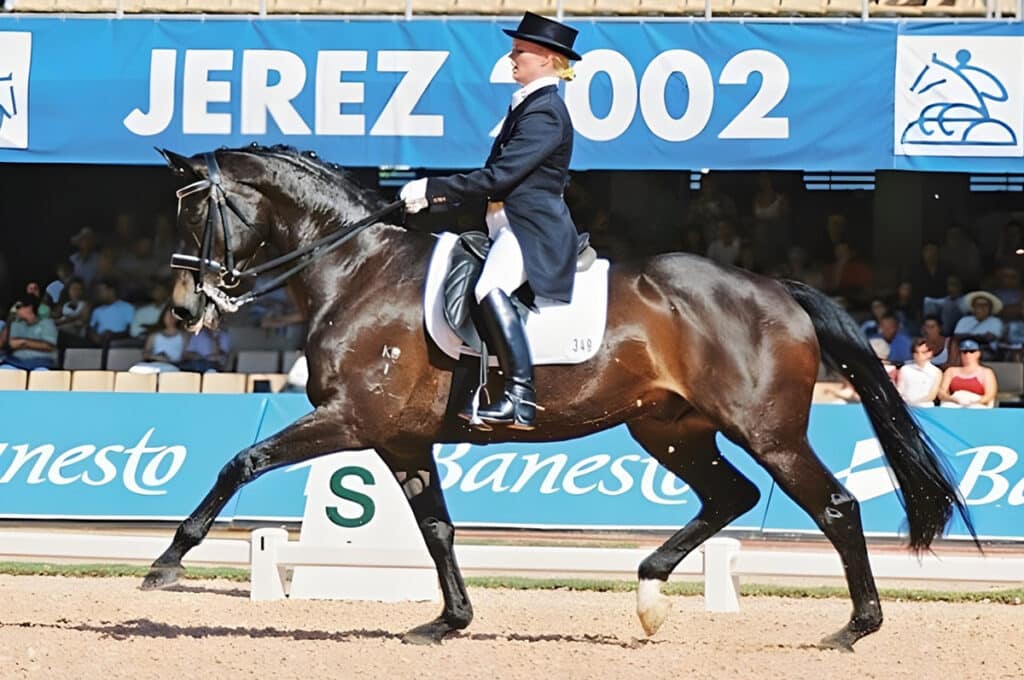
Kallista and Jamahl at the 2002 World Equestrian Games. Image supplied.
Before and after the Sydney Games she boasts a raft of international events, including World Equestrian Games, riding other talented mounts. Today she is still competing at the highest level, although the last decade has included another aspect to her life: “I never thought I could have kids… then Katherine was born when I was thirty-nine. She was ten weeks early, but she was perfect. Best thing that ever happened!”
Her husband, David Mainwaring, is an expert in environmental innovations. “With a team of scientists, he’s driving the growth of Solutec, a company dedicated to global water purification,” explains Kallista. “Its flagship product offers a revolutionary, eco-friendly solution designed to address critical water challenges on a global scale.”
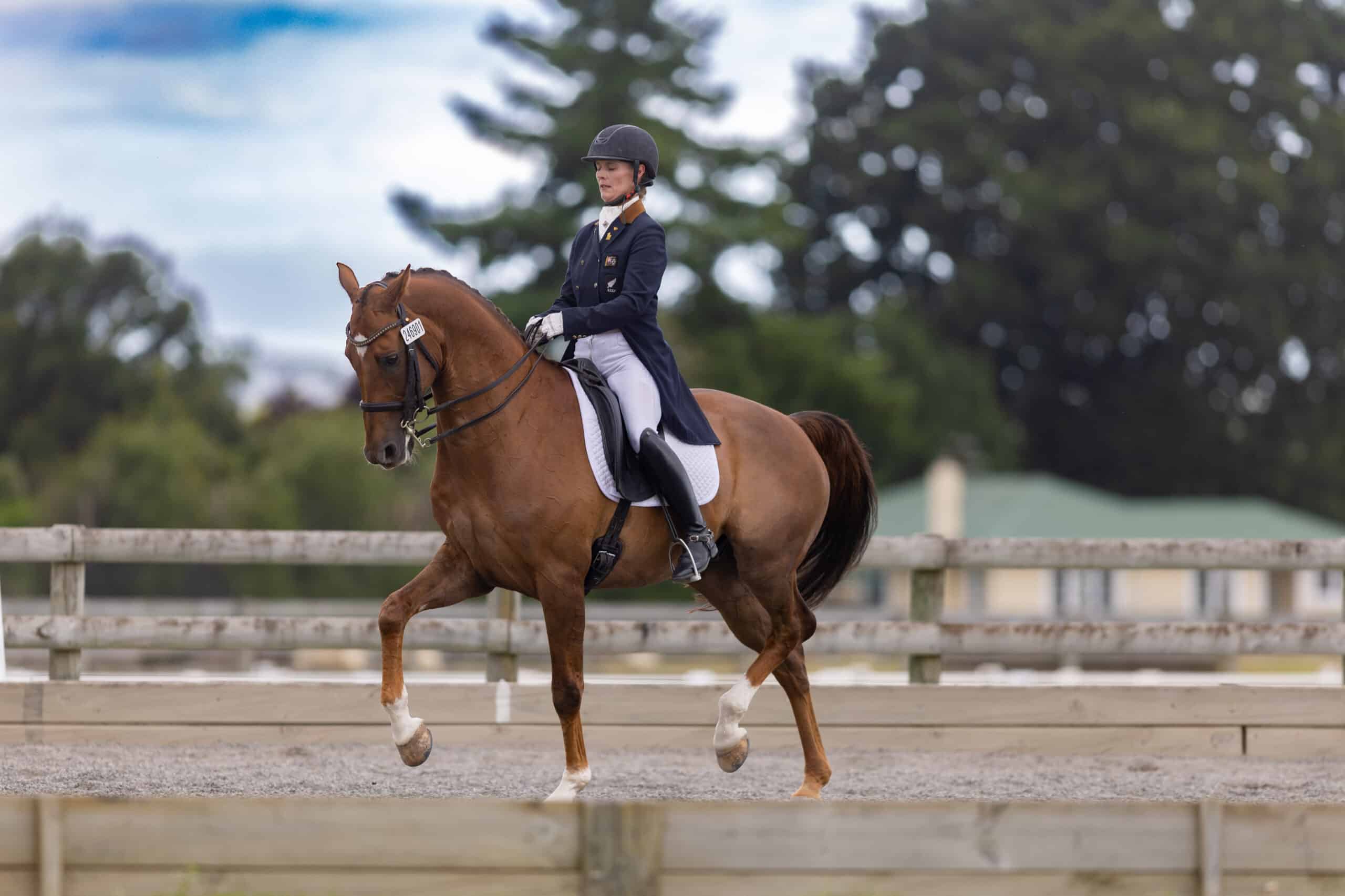
Kallista and Grand Prix horse Felix Westfalia FE. Imported from Germany as a two-year-old, Kallista says he was challenging as a young horse: “It’s lucky I love him, as he’s bucked me off at shows and people saw my head above the floats I was that high!” she laughs. Image by Belinda Pratt.
THOUGHTS ON TODAY’S DRESSAGE
And what are her feelings about dressage today on a global scale?
“The world now isn’t really setup for horses,” she laments. “They need time to learn and to hack around – and they need space.
“So many today have been turned into mechanical machines; horse sense is a rarity – and where’s the longevity?” she asks. “I’ve never broken a horse down yet and I’m really quite proud of that.
“The worst thing in New Zealand is anybody can teach – and it’s horrendous. They keep their clients happy, but many don’t know anything.
“In the last few years, as Clemens no longer travels here, Saskia Ostermeier has helped me hugely. She’s really encouraged me to think outside the square when it comes to dressage balance and all that. I get her assistance whenever I can.”
“I love teaching anyone who wants to learn and I find the biggest problem is that people don’t spend enough time learning how to sit on their bum – they have no balance.”
HEADING TO SYDNEY
One of Kallista’s hallmarks is her bluntness, which riders and spectators might witness at the forthcoming CDI.
“In Sydney I’ll be looking for comfortable horses which can carry me in the right place. Ones which stay upright when I move them around a bit. Trainable horses with good temperaments and some presence.”
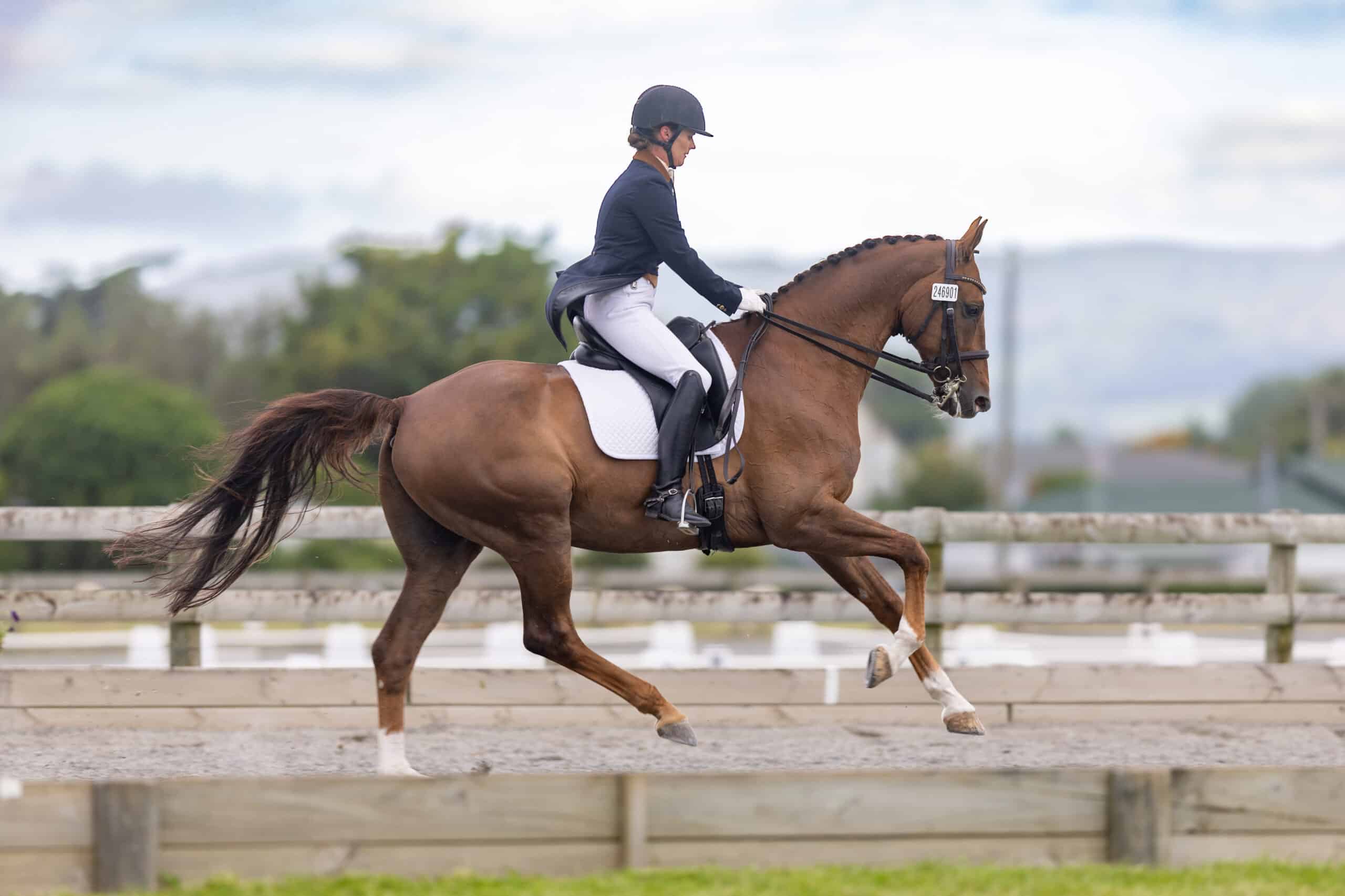
Kallista and Felix Westfalia FE. Image by Belinda Pratt.
When it comes to building trust and character, she highlights the parallels in people and horses.
“I never trust someone who can’t look me in the eye, and I’d never buy a horse which hasn’t got a kind eye because that’s their soul and their personality.
“I look forward to meeting you all at SIEC.”
Related articles
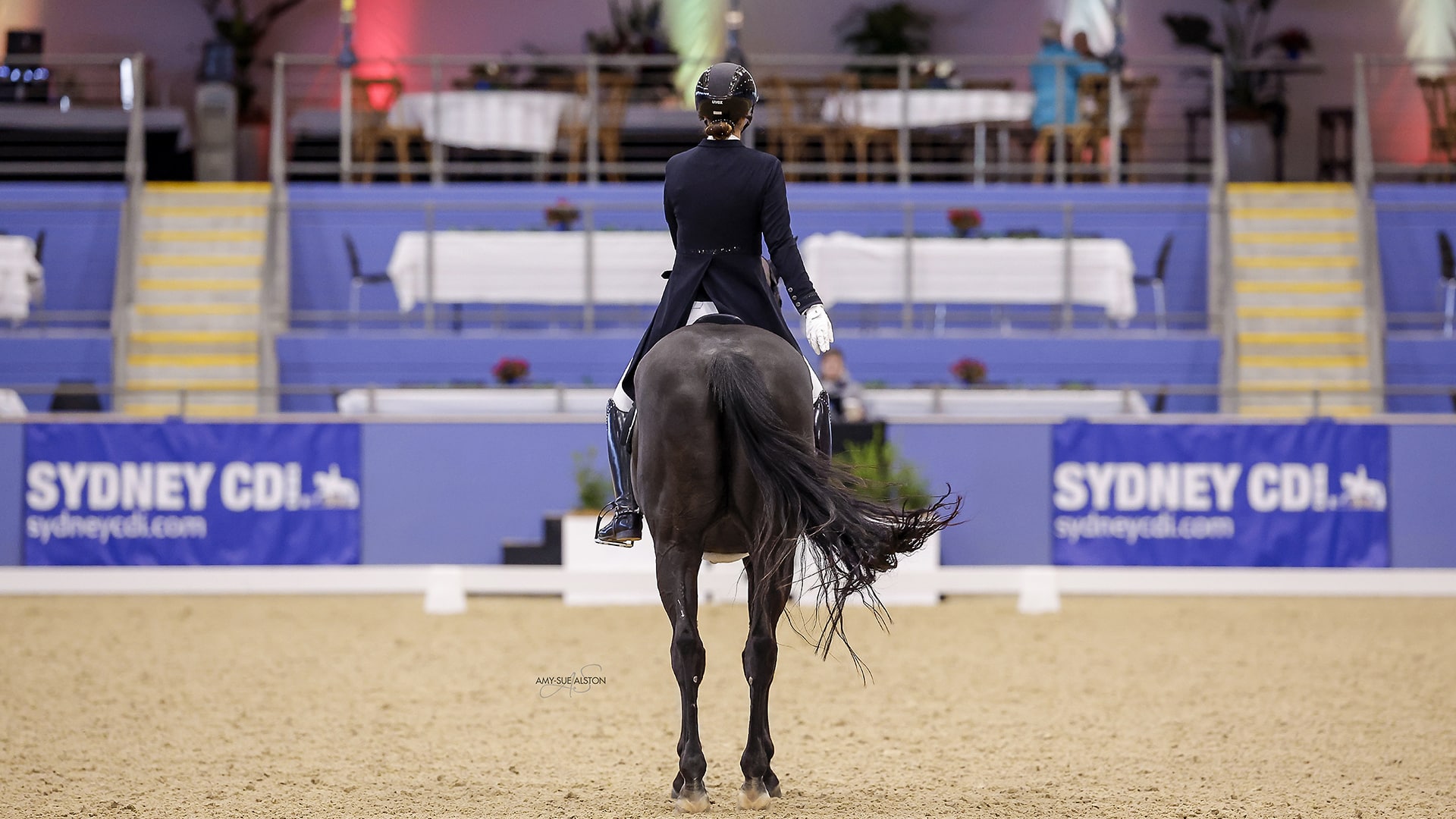
Straight lines, accuracy to markers and true corners set combinations apart. Sit back and watch any dressage test and what often sets one combination a cut above another is the precision with which they negotiate the lines each test prescribes.
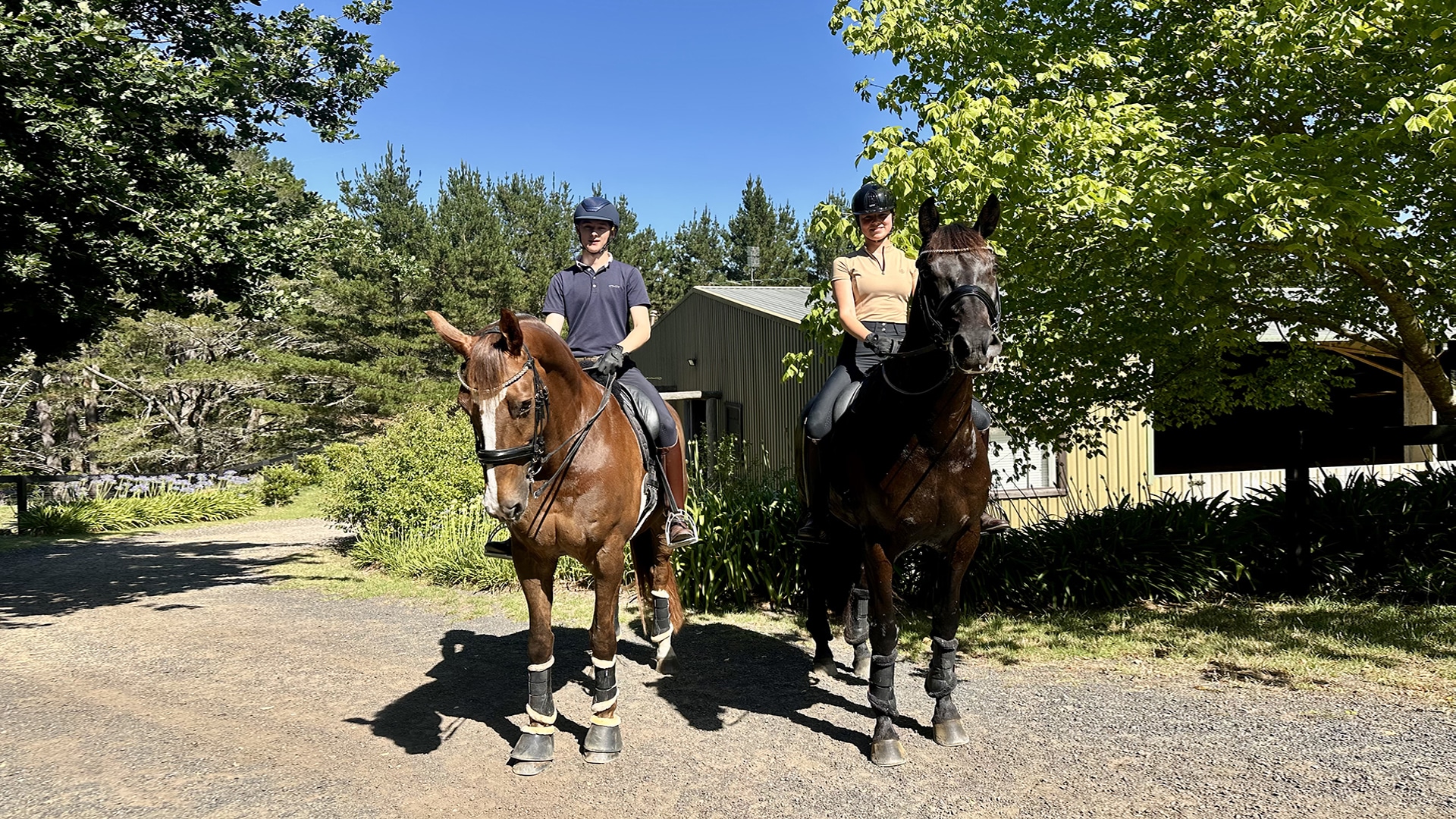
Having parents who are highly suucessful equestrians can put undue pressure and expectations on the offspring, but dressage riders Romy Sanna and Jake Parbery are two shining examples of the next generation following their own cues.