


Anhidrosis is the medical term for total or partial loss of the ability to sweat normally when stimulated. Why this occurs has not been completely determined, but it is thought to be associated with over-stimulation of the sweat glands, resulting in these glands becoming “desensitised” or unresponsive when stimulated.
Anhidrosis should not be confused with heat stress. Heat stress occurs when the ambient temperature is too hot, or the horse is exercised in humid conditions and cannot lose heat to the environment quickly enough to return its core temperature to normal so the cells in the body can function properly. Heat stress can occur in normal horses that sweat sufficiently when the high temperatures or humidity in the air prevent the sweat being removed; this means the heat is not removed. Anhidrosis and heat stress, however, are often associated with each other as anhidrosis will cause heat stress if management practices are not put into action when required.
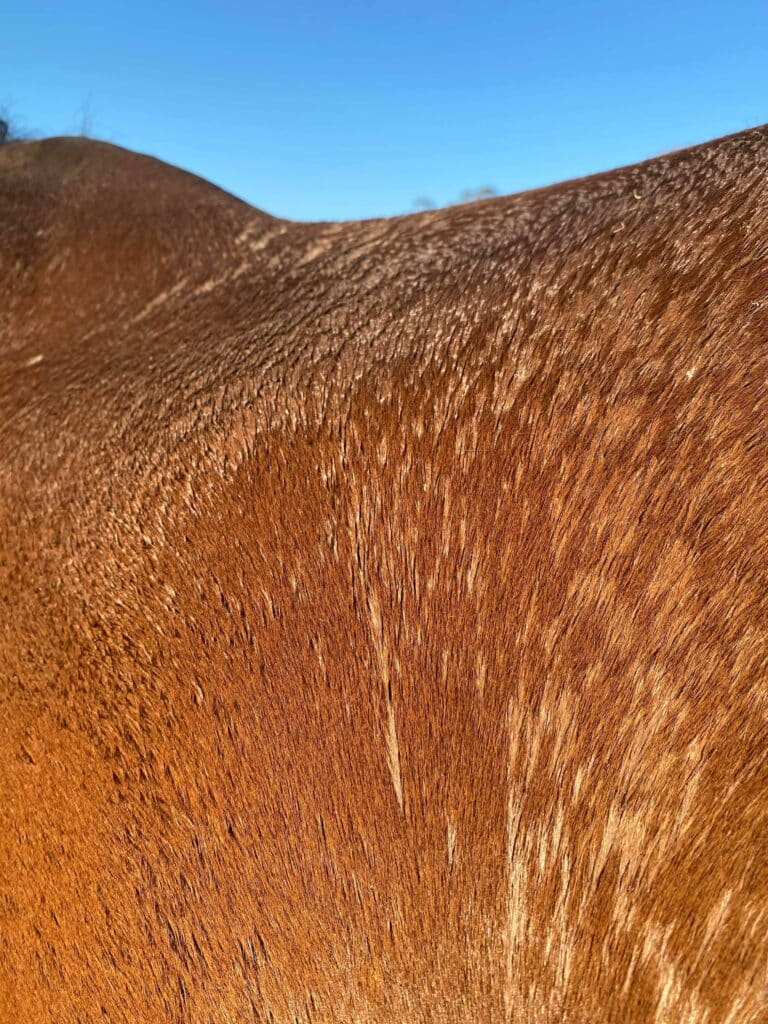
Horses have a little over 800 glands per square centimetre of skin.
There is no specific breed associated with anhidrosis, and many different breeds of horse have been affected, however, Thoroughbreds have been more frequently reported with the condition. This is potentially due to Thoroughbreds more commonly being transported from cooler climates to hot, humid climates, exacerbating the signs of anhidrosis and therefore they are investigated more frequently. There has been evidence to suggest that anhidrosis has a genetic component as some families of horses have had a higher incidence, however, there still needs to be more research done to determine the heritability of this ailment. There has been no sex, age or coat colour identified as a higher risk, however, anecdotally some claims have been made to suggest dark coat-coloured horses are more at risk.
The predominant sweat gland in horses is the apocrine sweat gland, with horses having a little over 800 glands per square centimetre of skin. These sweat glands have a duct that opens into a hair follicle and releases sweat via the follicle. These differ from eccrine sweat glands that open directly onto the skin surface and are the predominant sweat glands in humans. Apocrine sweat glands can be stimulated to release sweat in two ways; one is by the release of adrenaline from the adrenal gland and the other is more complex and requires, in part, direct neural stimulation of the sweat gland (sudomotor function).
Sweat plays a major role in thermoregulation in the horse, with 60-70% of heat loss occurring via sweating. This means that horses with anhidrosis don’t have the ability to lose heat through their skin and need to rely on losing heat through the respiratory system. For this reason, horses that suffer anhidrosis have high respiratory rates (tachypnea) as the body tries to dissipate the generated heat out through the lungs. Anhidrotic horses are typically identified in hot and humid climates, as these environments are going to exacerbate the clinical signs. Horses have been identified as suffering with anhidrosis in cooler climates, but because horses are less clinically affected, they are harder to recognise as the body can thermoregulate easier (lower ambient temperature allows the heat a horse produces to dissipate quicker).
THE CLASSIC CASE
The classic case of anhidrosis is seen when a horse is introduced into a hot climate from a much cooler environment and soon after develops symptoms. This is referred to as acute anhidrosis. The clinical effects are especially evident when asked to exercise in warmer conditions that they haven’t been previously acclimatised to. Initially these horses may be observed to sweat profusely but then show little or no sweating. This is why the suspected initiator of anhidrosis is thought to be an over-stimulation of the sweat glands. Some anhidrotic horses can maintain the ability to sweat in certain regions, such as under the mane, in the relatively hairless region under the arms (axilla), in the groin (inguinal region) and around the anus/vulva/scrotum (perineum). It can also occur under tack sites (saddle and halter). Therefore, it should be noted that the presence of a small amount of sweat in these areas does not negate a diagnosis of anhidrosis.
Horses that suffer with failure to sweat over long periods can develop long-term changes to the body, particularly their skin, and this is known as chronic anhidrosis. In these horses, the skin becomes dry and flaky, and hair can be lost from areas of the body. This hair loss or alopecia generally occurs around the face and neck.
Other clinical signs seen with anhidrosis include a decrease (acute anhidrosis) or increase (chronic anhidrosis) in their water intake, mild anorexia, poor performance and loss of interest in their surroundings (lethargy). Following work, affected horses will show elevated body temperatures that are slow to return to the normal range. Usually, after exercise a horse’s core temp will rise but should return to normal (37.5-38.3°C) within 30 minutes. A body temperature over 38.5°C after 30 minutes supports the clinical picture of anhidrosis, however, it is not pathognomonic for this condition as there are other causes of prolonged elevated temperatures after a horse has exercised, such as pain and infection.

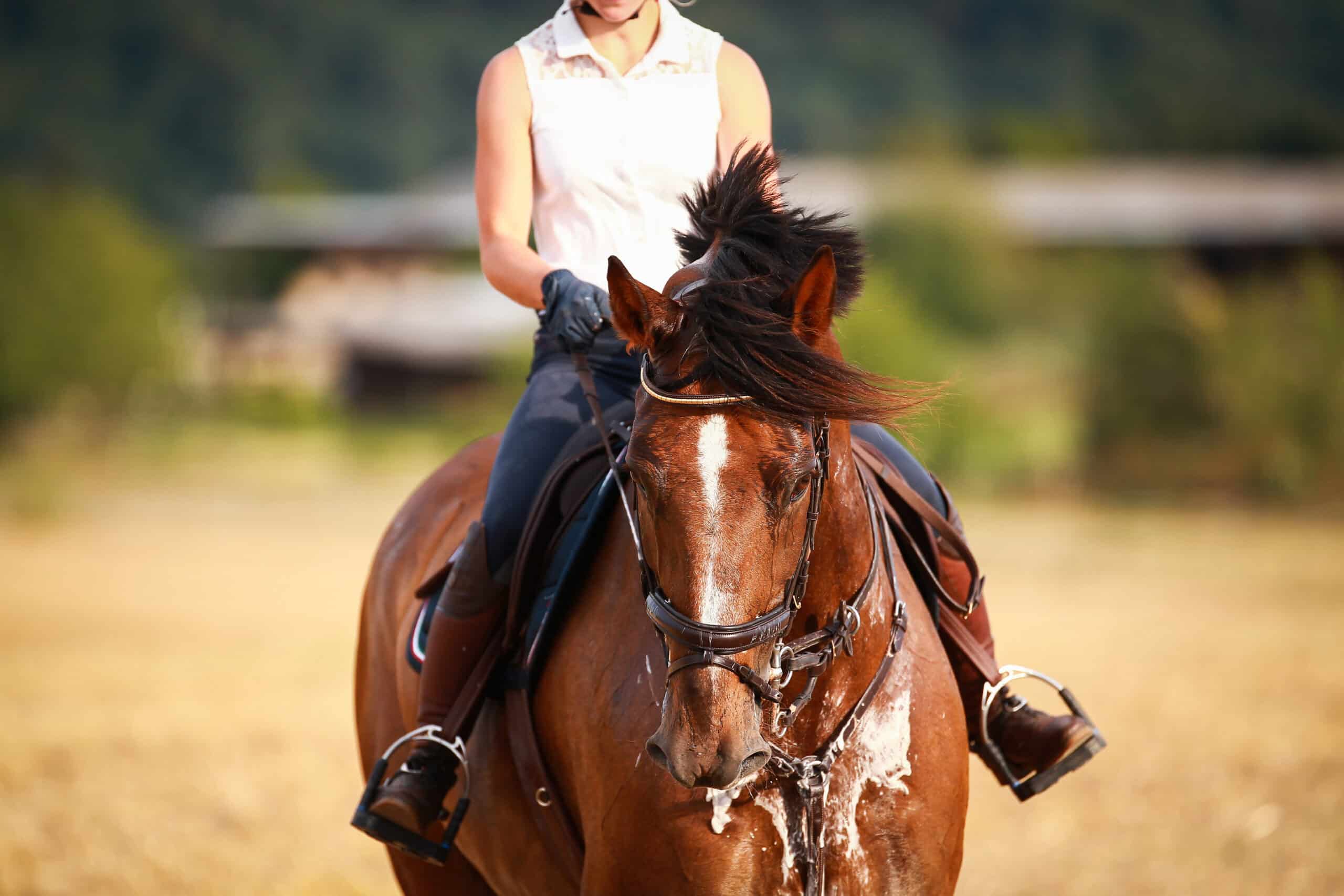
Acute anhidrosis can occur when a horse is introduced into a hot climate from a much cooler environment and soon after develops symptoms. When worked in the warmer conditions, the horse may initially be observed to sweat profusely – but then begin to show little or no sweating.
A presumptive diagnosis of anhidrosis can be made based on clinical symptoms and a history of a change of location to a hotter, more humid climate, but a definitive diagnosis usually requires a skin biopsy or intradermal skin testing. This latter test involves a series of injections into the skin of a drug (terbutaline sulphate or salbutamol sulphate are examples) prepared at varying dilutions, that are designed to stimulate sweating in normal horses. A normal horse will sweat at all dilutions; one with partial anhidrosis may only sweat at sites where lower dilutions of chemical are administered. A horse with total or severe anhidrosis will not sweat at any dilution.
Skin biopsies will show evidence of changes in the thickening of certain structures in the skin and lack of, or reduction in, size of other structures such as the ducts of the sweat glands and the small villi within these ducts. In some cases, the ducts that are present are clogged up with debris, indicating they haven’t been functioning and sweat has not been expressed out to clean any debris from the ducts.
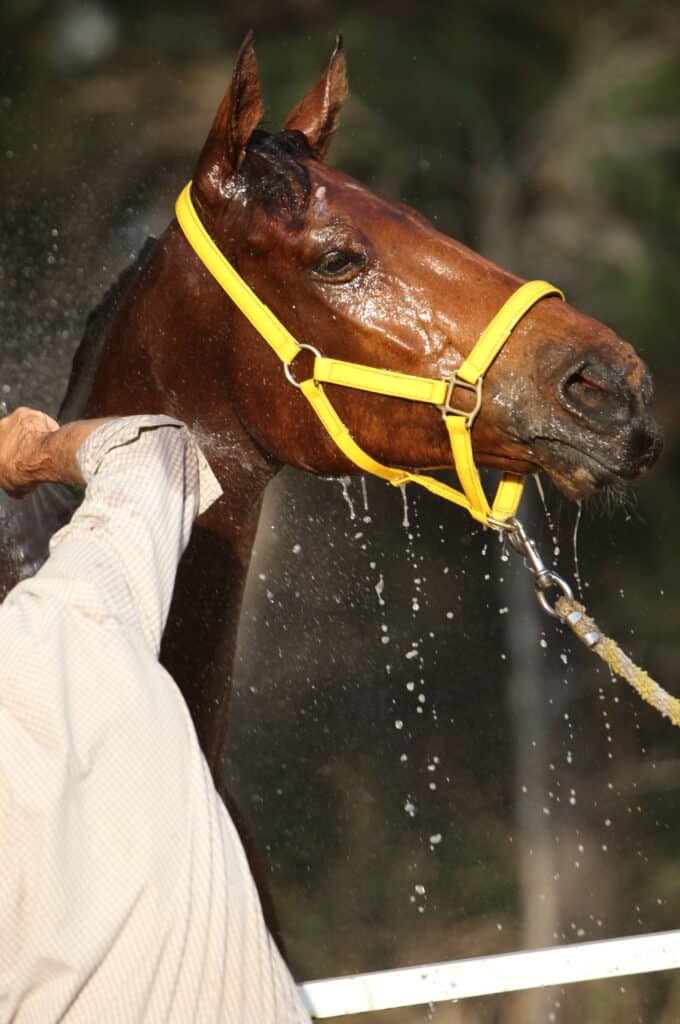
If you have a horse that suffers from anhidrosis, be prepared to jump into action if early signs of heat stress are detected.
NO PROVEN CURE
There is no medical cure for anhidrosis, although many have been tried, and treatment is based around the management of the horse and its environment. Horses that have suffered with anhidrosis have been known to return to a normal sweating status when relocated to cool climates for extended periods, however they revert to an anhidrotic state when returned to a hot climate. Therefore, anhidrotic horses that really struggle to cope with hot, humid conditions are better relocated indefinitely to cooler climates if this is an option.
When the horse must remain in hot and humid environments, the main priority is to monitor the horse for signs of heat stress and be prepared to jump into action if early signs of heat stress are detected. Simple husbandry measures such as counting the horse’s respiratory rate or taking the temperature immediately after work and again 30 minutes later can alert the owner that the horse is at risk. Any prolonged increases in respiratory rate or temperature should prompt the owner to utilise the appropriate measures to help reduce the body’s temperature (cold hosing, ice, fans etc).
Decreasing the risk of heat stress can be achieved by working the horse in the coolest part of the day (early morning or late evenings) and having the facilities available to be able to cool the horse as soon as its work is finished. This can be done using cold water hoses, buckets of iced water, or mist fans to help wet the coats of the horse so heat can be transferred from the internal core of the horse into the water on the skin and then removed by scraping off the water or evaporating it using a fan. Some horses will relish having access to dams or large water containers they can voluntarily stand in to cool themselves off.
Stables should be fitted with large industrial fans to cool the environment and promote the removal of heat from the horse. If horses are housed outside and there is no option to house them inside out of the heat, adequate shade must be provided. Avoid feeding large amounts of hay as a lot of internal heat is produced when digesting hay (hay is great to feed horses in the winter as it provides a source of heat to keep the horse warm).
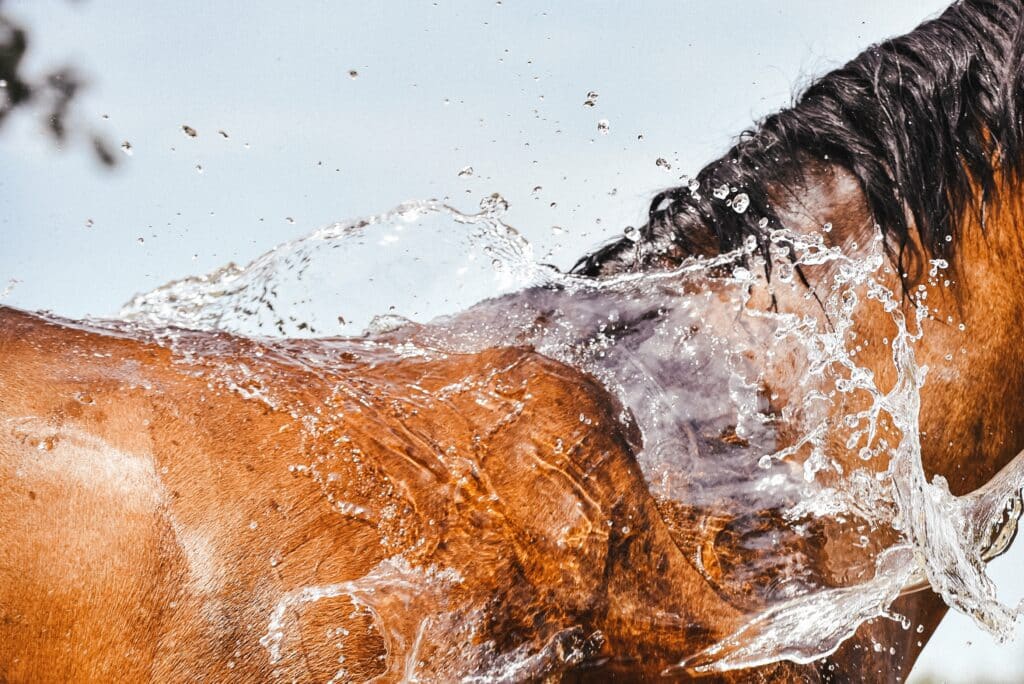
Managing anhidrosis remains the key to ensuring affected horses can keep working while still continuing to enjoy life.
Oral electrolytes are commonly recommended to all horses performing in hot climates due to the amount of electrolyte lost in sweat. Some companies, however, claim to have electrolyte products that induce sweating, but these claims have not been proven scientifically and may only reflect this positive effect on horses that are deficient in salts and not true anhidrotic horses. Other reported “treatments” that have been touted as cures but not proven include iodinated casein, tyrosine, levothyroxine, and vitamin E. Drugs designed to decrease the amount of adrenaline that can attach to the receptor sites have also been tried, but similarly no studies to confirm or reject this as a valid treatment have occurred. In all cases, horses should always have free access to plentiful amounts of clean, fresh water.
Research continues to find answers but until a cure is found, identifying and managing anhidrosis remains the key to ensuring our horses can keep working while still continuing to enjoy life. EQ
Related articles
With the hot weather upon us, providing access to good clean water for your horses is even more vital, says veterinarian Dr Maxine Brain, but how much water does a horse need?
Dr Maxine Brain tells us what to look for and how to treat heat stress in horses, whether brought on by extreme temperatures on a freakish summer’s day or over-exertion on a warm day.