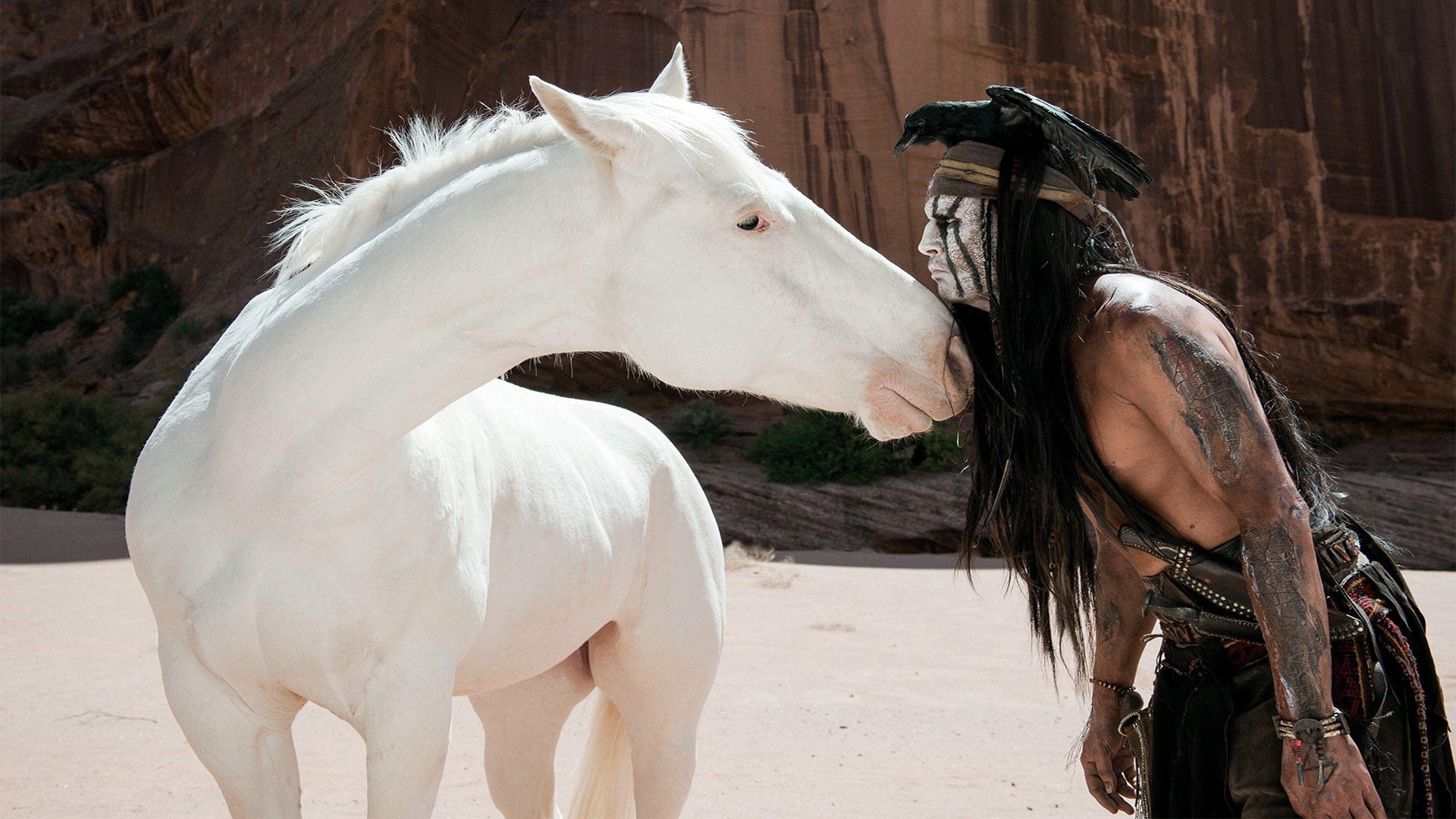
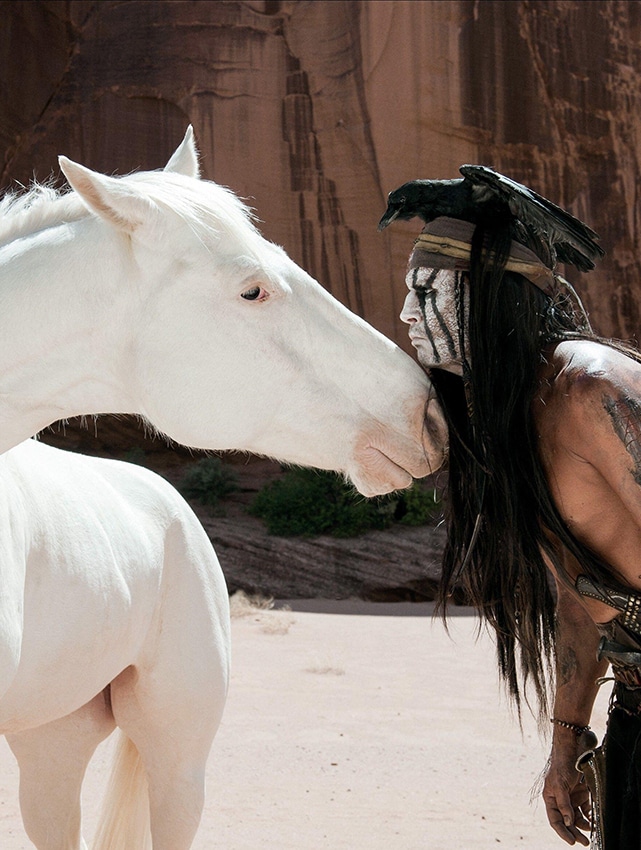
Johnny Depp starred alongside several horses in ‘The Lone Ranger’ (2013). Image by AJ Pics/Walt Disney Pictures.


Think Edward Scissorhands, Willy Wonka and Jack Sparrow – quite clearly Johnny Depp loves dressing up in movies. As Tonto in The Lone Ranger, his face is painted white with long black lines, a dead crow is stuck to his head and his neck adorned with pheasant feathers.
‘THE LONE RANGER’ – 2013
Directed by Gore Verbinski and starring Johnny Depp and Arnie Hammer.
Johnny Depp, who claims Native American heritage, had taken his Tonto makeup look from a painting titled I Am Crow. The picture received an Oscar nomination for best makeup – but it eventually went to the artists on The Dallas Buyers Club.
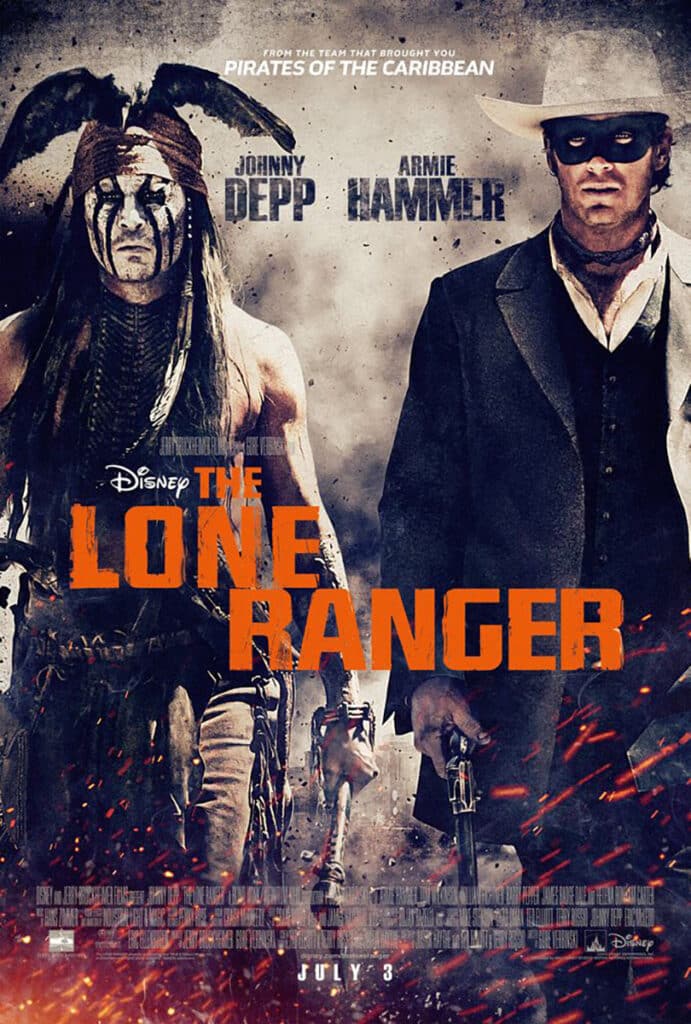
The film poster for ‘The Lone Ranger’ (2013). Image supplied.
The Lone Ranger, real name John Reid, was played by Arnie Hammer, who wore conventional western gear – and, of course, a mask. The plot mostly replicates the basic storyline of all the preceding movies and TV series, interspersed with those recognisable refrains from Rossini’s classical William Tell Overture.
“At the end he falls
over dead. He didn’t –
a fake horse was used!”
But here there is a supernatural element where the villains are such evil spirits, they cause an imbalance in the natural world. Also, unlike past versions, Tonto is out to avenge the deaths of his Comanche tribe massacred by greedy white men when he was a child.
One of the most significant characters in all these productions is Silver. In this 2013 film, four different horses are cast in the role of the famous white stallion. One was a registered Quarter Horse, dark-eyed and completely white. He had been bought by KC Peterson, a Nebraskan rancher, who named him Leroy. He broke him in and found the horse to have a great temperament and an ideal mount for beginners.
For decades Peterson had worked as a riding double, stuntman and livestock contractor. On hearing The Lone Ranger was to be remade, he sent six photos to Bobby Lovgren, the film’s head horse trainer. Leroy got the job and off he went with Peterson and a team of mules, horses and wagons.
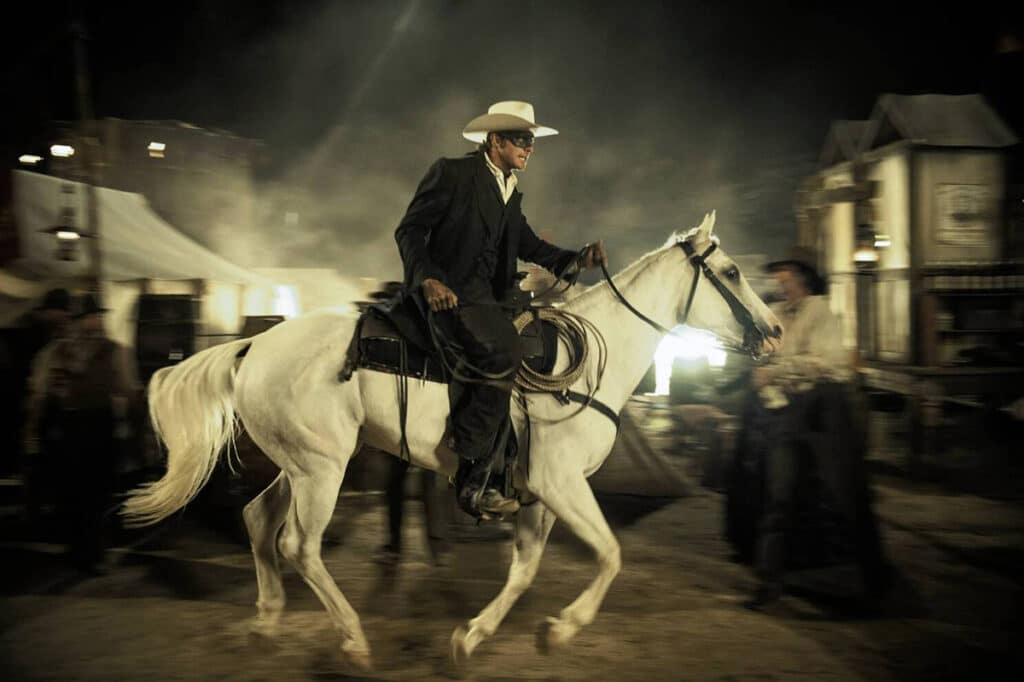
The Lone Ranger was played by Arnie Hammer, while Silver was portrayed by four different horses – one of which was the white Quarter Horse, Leroy. Image supplied.
TRIVIA:
In a scene where Silver licks the scorpions off the actors’ faces, two fake heads were placed in the sand and covered with treats. The horse was cued to bend down to eat the treats and the scorpions added in post-production by CGI.
Much of the filming was near Albuquerque, New Mexico, where the crew had created a Wild West look to the location, brought in two steam engines and laid down seven miles of railroad track.
“During filming Leroy was the only one that would run close to the trains,” recalls Peterson. “In these sequences you’ll notice the difference between him and the others in the picture – he’s the biggest, jowliest one.” Arnie Hammer rode him a lot of the time.
Another white Quarter Horse was a gelding, actually named Silver, which had been in a few commercials before being cast in this feature. He performed the liberty sequences.
Then there was Cloud, a rare white Thoroughbred which Lovgren painstakingly taught to “drink beer”. The trainer placed a rubber bottle into his mouth and pulled on his rein, giving the illusion he was actually drinking.
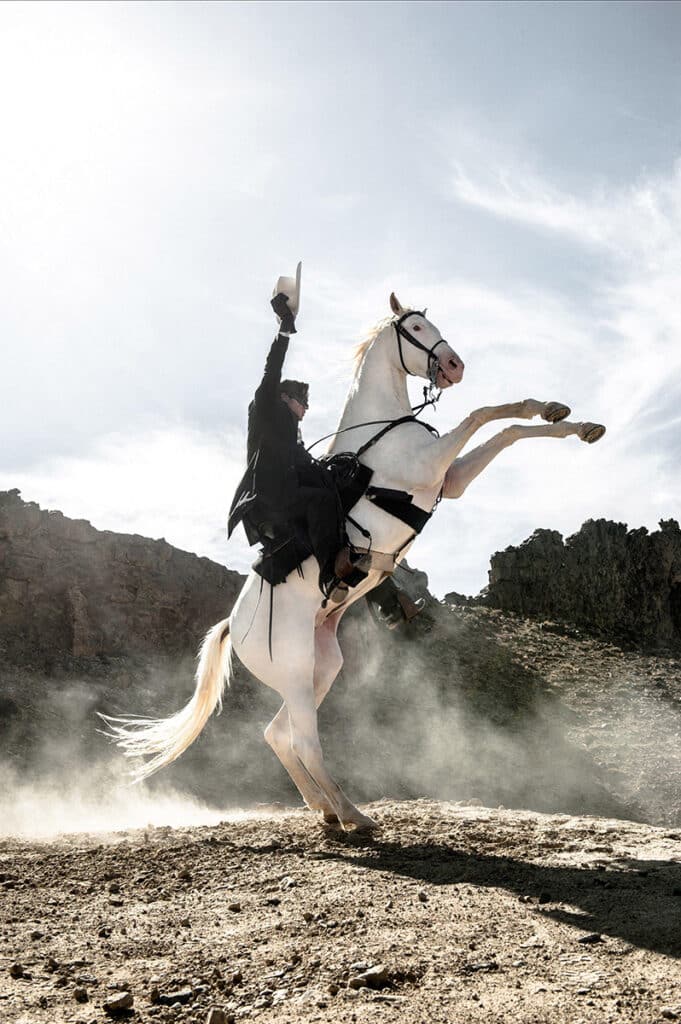
Cloud, a rare white Thoroughbred, performed the trademark rearing sequences. Image by Cinematic/Walt Disney Pictures.
Cloud executed all the jumps, the running scenes across a house roof and atop a moving train, and performed the trademark rearing sequences. The fourth horse, a white paint named Caspar, was used as a double and in long shots.
TRIVIA:
The dead horse lying on top of a Texas Ranger was fake. Where some rabbits are seen coming out of a cave, the location was fenced and animal trainers used clickers and food to encourage them to sit up. In the closing scenes the rabbit eating the scorpion was done through CGI.
Screen veteran Houdini had a cameo role where the heroes follow him through the desert. This buckskin, whose credits include Seabiscuit and The Legend of Zorro, was dyed black and directed to walk at liberty on top of a ridge through sand. It was a challenging sequence. “I was glad I had him to do it because he’d had so much experience,” says Lovgren.
At the end he falls over dead. He didn’t – a fake horse was used!
Johnny Depp also fell over during filming, and he could have been dead – but his coloured horse Scout got out of his way. When dashing over the desert Depp became unbalanced and fell over to the side. “You’d think, in that kind of situation, everything would happen really fast; that panic, fear, adrenaline, all that stuff would kick in. It didn’t,” he says.
“I was hanging off the horse’s side looking at the wonderful, beautiful striations of muscle in his front legs, and all I could think about was – hooves. How do I avoid the hooves?’ So I just held on until I thought: ‘Now’s a good a time as any to let go – so I did.”
Scout jumped over him and the actor escaped with a few bruises.
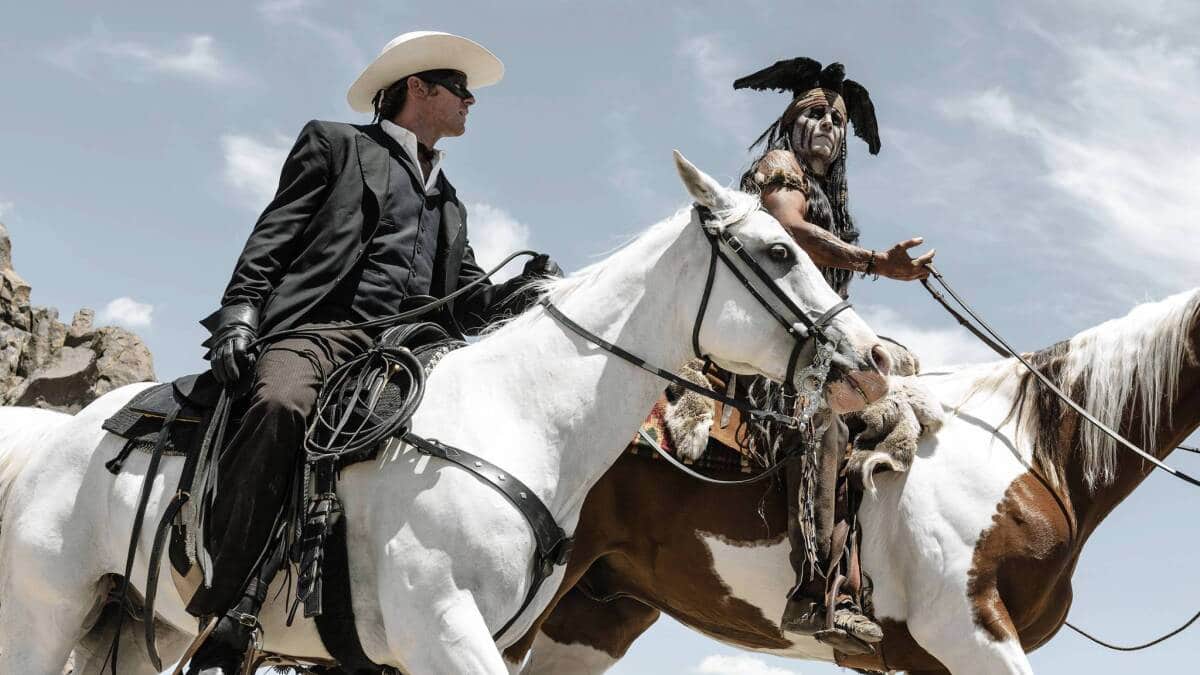
Arnie Hammer on Leroy and Johnny Depp riding Scout. Image supplied.
TRIVIA:
At the end of this film the Lone Ranger shouts the signature catchphrase first heard on the 1933 radio show – “Hi-yo-Silver! Away!” To which Johnny Depp’s Tonto responds: “Don’t you ever say that again”.
Many who worked on The Lone Ranger said that Depp was clearly an animal lover – he treated his horse as a partner rather than a prop and invested time in training and understanding the animal.
After filming finished he heard Scout was to be sold at auction. He coordinated with animal care specialists and legal advisors to secure the horse’s future, ensuring the pinto would be placed in a safe and nurturing environment and he arranged for transportation, veterinary care and ongoing supervision.
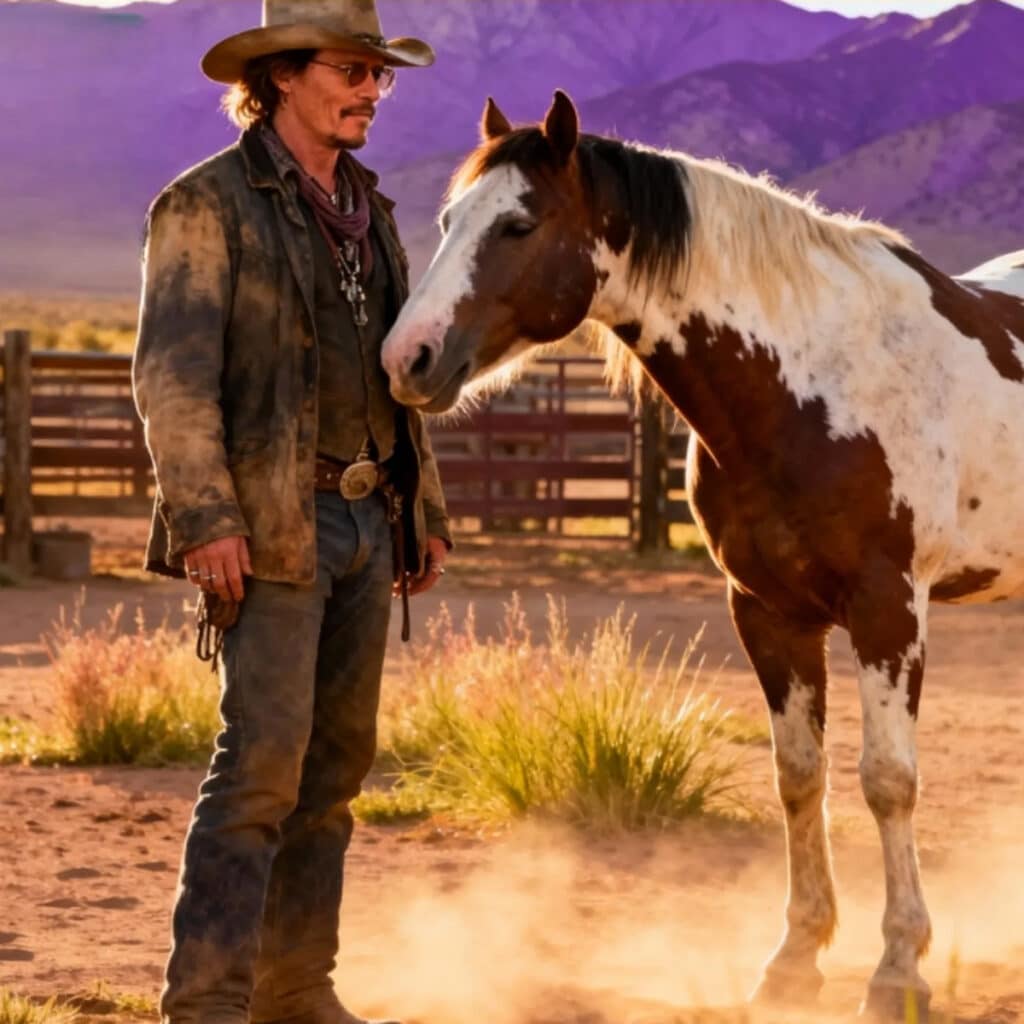
Johnny Depp and Scout. Image supplied.
“Now’s a good a
time as any to let
go – so I did.”
Director Gore Verbinski, who had made the Pirates of the Caribbean trilogy, was hoping that this one would be a western version of the pirate franchise and be a success at the box office – it wasn’t and lost the studio millions.
But the American Humane Association monitored all the animal action and scored the film a 10 out of 10. No animals were harmed on The Lone Ranger – only balance sheets!
Available to stream on Disney+; rented or purchased digitally through platforms including Apple TV, Prime Video, Google Play, and YouTube.
Next time in ‘Horses & Movies’, the Nick Skelton documentary ‘Big Star’, which has just arrived in Australia for streaming. EQ
Related articles
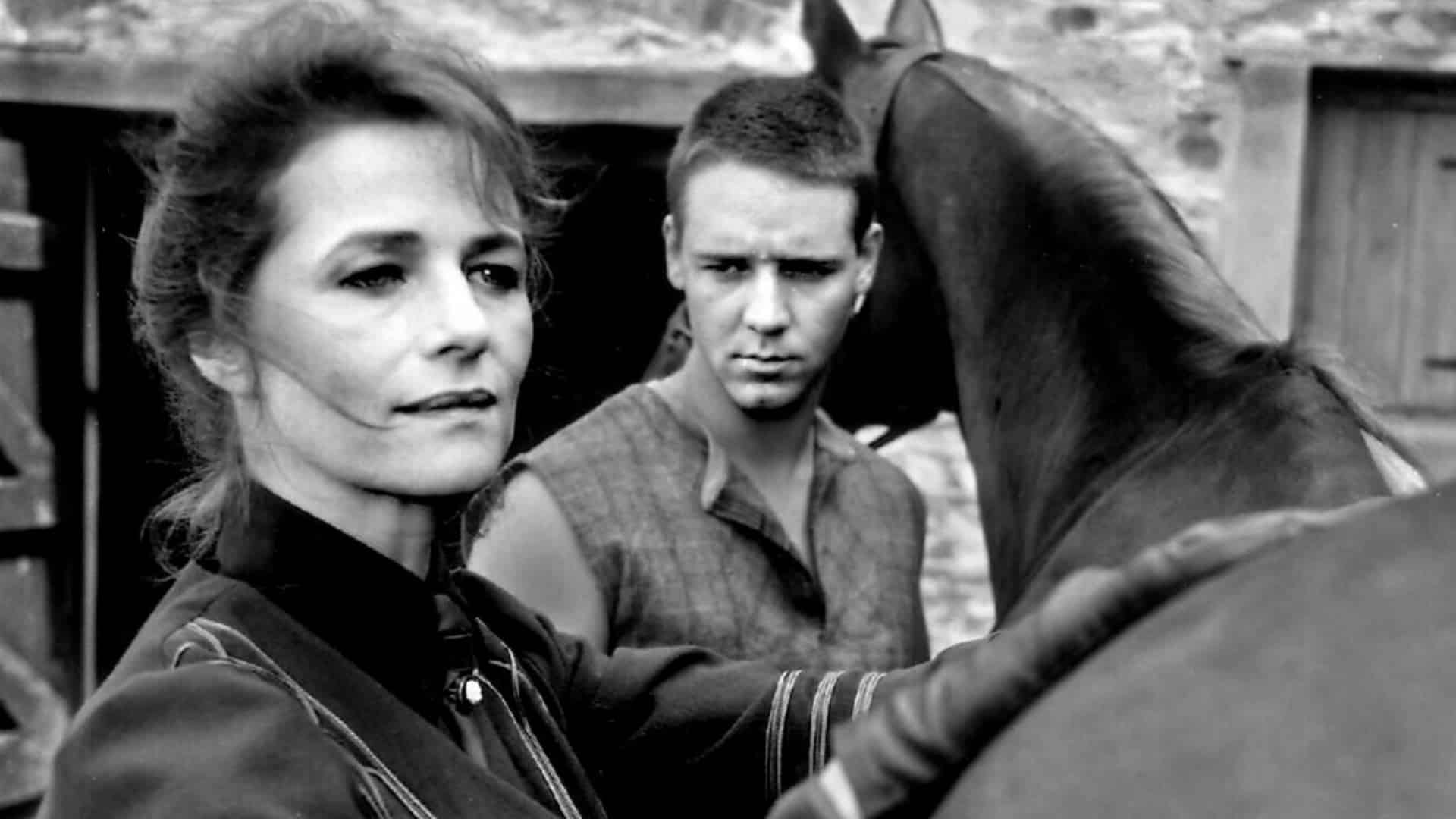
Based on a story by Alan Marshall, who had suffered polio as a child, Hammers Over the Anvil takes place in 1910 centred around a crippled boy who idolises a breaker named East Driscoll played by a youthful Russell Crowe.
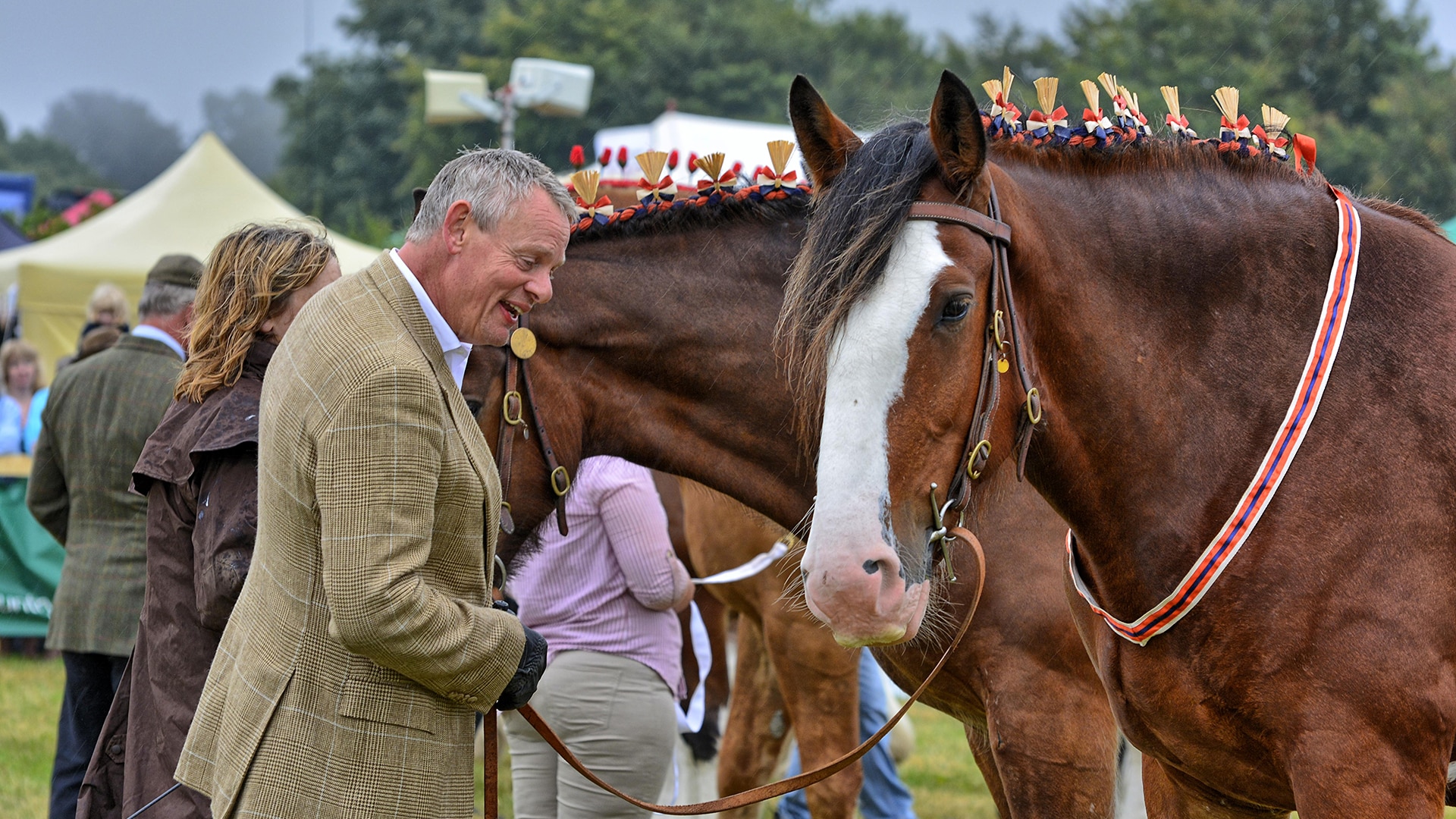
Best known for his role as the affable GP in the Doc Martin TV series, Martin Clunes loves horses and is head of the British Horse Society and a member of the British Carriage Driving Society. It was natural he would make documentaries about working horses.