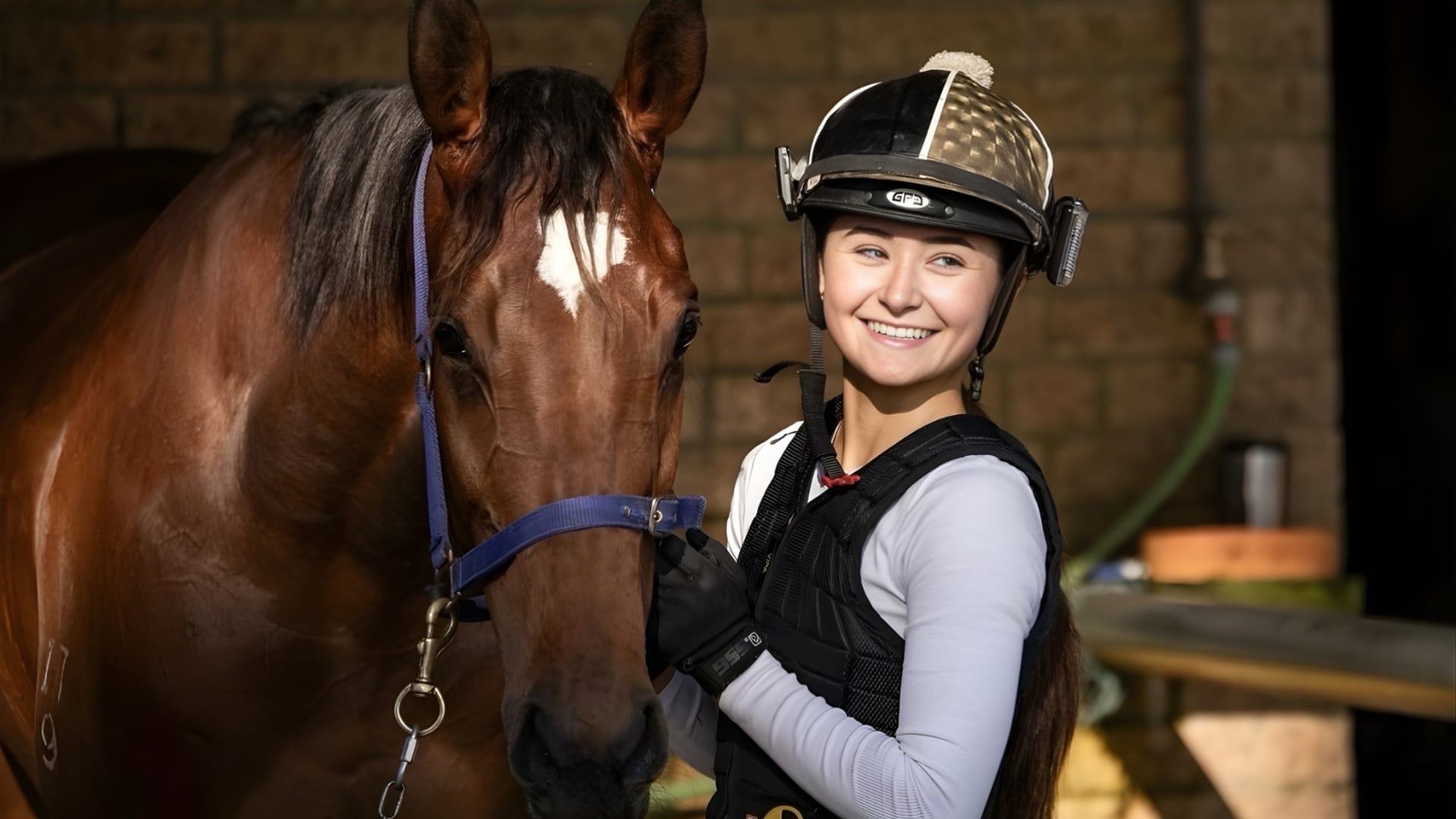
Young show jumper Jett Newman is forging a successful career as a jockey. Image supplied.


From Pony Club to the racetrack, Jett Newman is proving how an equestrian foundation can shape elite success, with her early all-round riding education now underpinning a rapidly rising and composed career in racing.
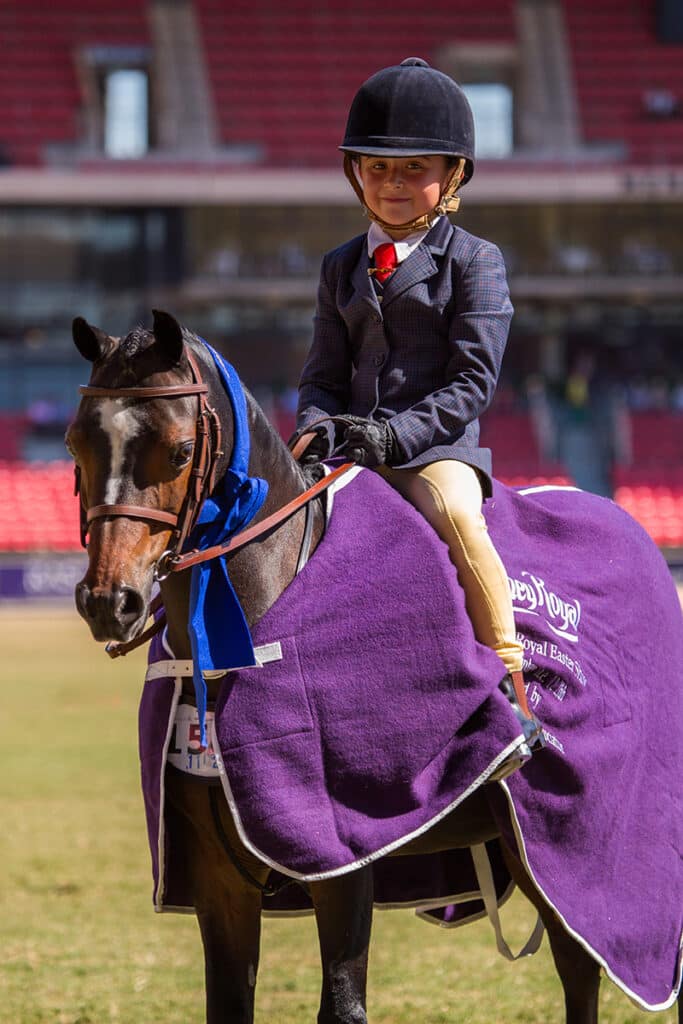
Jett Newman was in the saddle from a young age and enjoyed success from the get-go. Image by Allira Fontana Photography.
Jett Newman’s story starts with her first name. Parents Debbie Greaves and Mitch Newman were originally hoping for a boy, and they loved the band Jet, so “Jett” was their chosen name. When a girl arrived, the name still felt right — and Jett has well and truly owned it ever since.
Debbie had always been a horse person. In her younger days she rode whenever she could, was always around horses and always wanted to become a jockey. Her heart was in riding racehorses, but she also rode show horses and did show jumping.
“Jett was mad about horses
from the very beginning…”
Mitch, who was a jockey, had given Debbie a practical understanding of the racing world — its routines, pressures, and what it takes to succeed. From Debbie’s perspective, a life in racing was never about rushing straight into the role. She believed a young rider needed a firm grounding first: horsemanship, balance, feel and experience across different types of horses and styles of riding.
Debbie’s eldest daughter had been brought up in a city apartment, where the chance to ride simply wasn’t there. Based at Glossodia – a well-known horse area at the foot of the Blue Mountains, on the outskirts of Sydney – from when Jett was very young, Debbie made sure the younger children had the privilege of ponies and horses always around them, just as it had been with her.
Debbie says Jett was mad about horses from the very beginning: she rode and sat on horses before she could walk, and as soon as she turned five, she started riding at Hawkesbury Pony Club. Debbie has always been clear that Pony Club gave her children the best beginnings in equestrian sport — not just for riding skills, but for values, good horsemanship, and a broad education that keeps every option open.
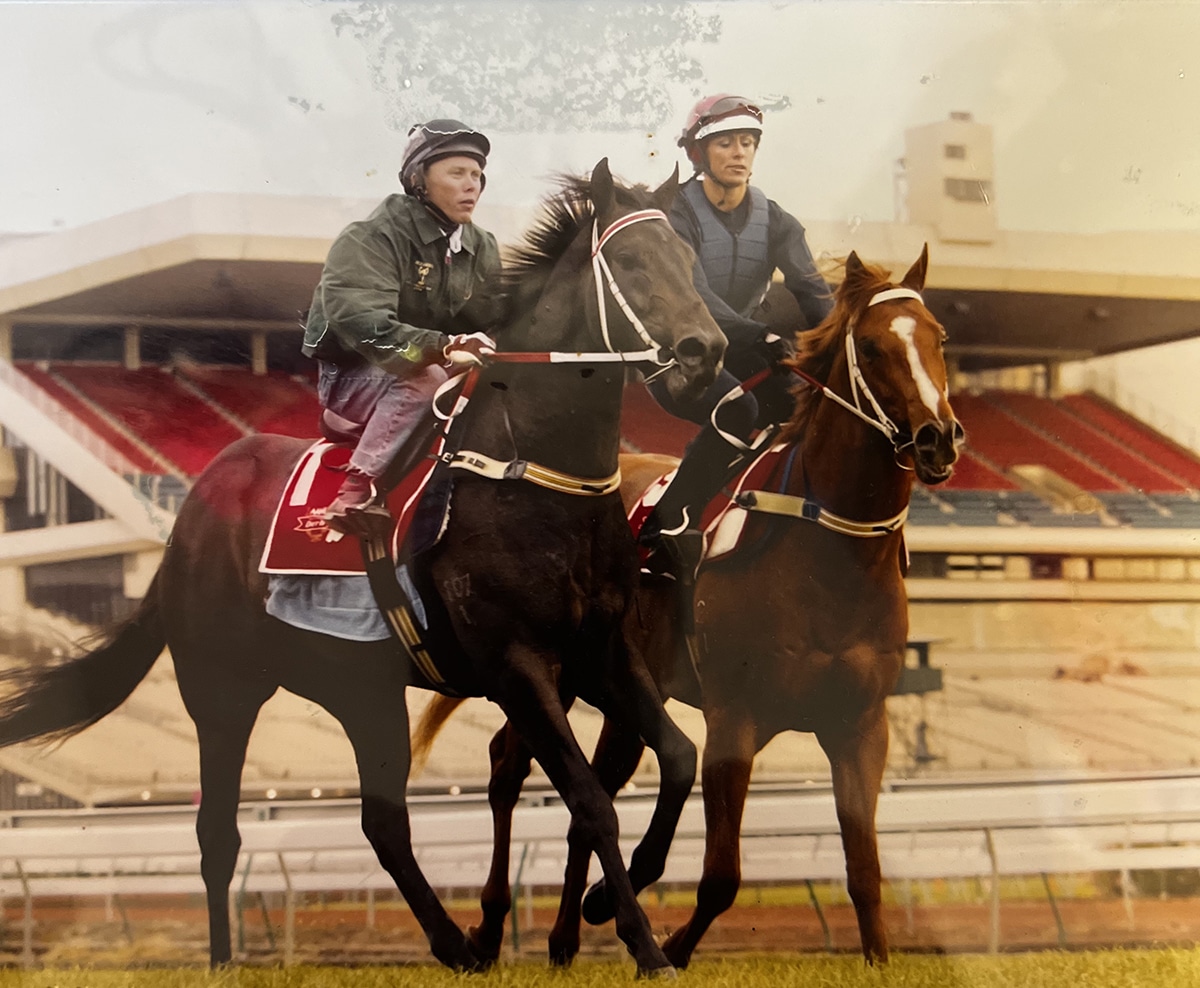
Jett is following in her parents’ footsteps and has become a jockey. Pictured here is her mother, Debbie. Image supplied.
Jett loved all the disciplines: showing, dressage, eventing and show jumping. That variety mattered. Debbie’s approach was to give the children every opportunity to learn, and to build a real foundation before embarking on a specialised pathway. If racing was ever to be on the cards for Jett, it would be built on knowledge and feel, not an impulse.
“If racing was ever to be
on the cards… it would be built
on knowledge and feel.”
ALL-ROUND EXPERIENCES
Jett’s talent showed early. Diminutive, balanced and attentive, she soaked up instruction. People trusted her with good ponies, and she made the most of them. One little buckskin became a standout. At a Dressage NSW competition, Jett scored 75% in a Novice test and beat all the big horses — a result that made people sit up. That pony went on to win at Sydney Royal. Another pony, Angel, also won a remarkable number of classes. By the age of eight, Jett won a Working Hunter class at Sydney Royal — a milestone that confirmed she was not just capable, but exceptional for her age.

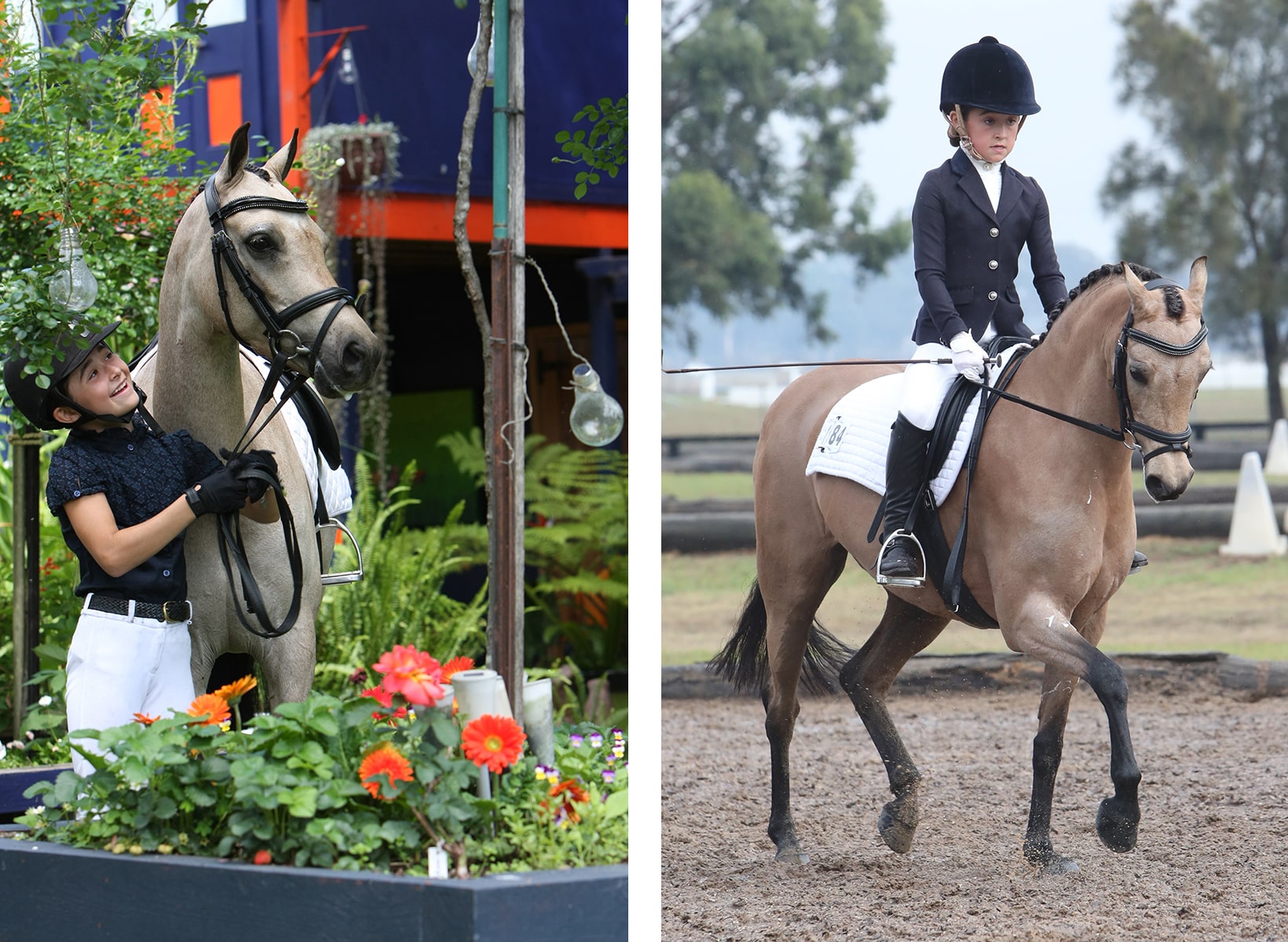
Just as striking as the results was Jett’s temperament. She was never one to boast about performances and was quick to congratulate other people’s success. Win or lose, she stayed remarkably even. There was a calm demeanour about her, and an empathy with her ponies that people noticed.
While Jett enjoyed every discipline, show jumping began to pull more strongly as she grew. Her sister leaned toward it, and Jett was keen to have a go as well. Jett had the benefit of riding under very good instructors and mentors. Her early dressage and flatwork education helped build straightness, balance and clarity — basics that would become priceless when the fences went up.
Through Helen Chugg and Amanda Madigan, Jett was exposed to quality horses and opportunities. A young mare she tried was exciting but a little strong and young for the petite Jett at the time — even though, as always, she wanted to make it work by hook or by crook.
A competitive Thoroughbred show jumper was then purchased for her, and it taught her a great deal. It strengthened her skills, sharpened her feel, and gave her the kind of education that comes from riding a real goer with scope and opinions.
A major step forward came when, again through Helen Chugg, they found the grey mare Wanda — previously a very successful eventer with Olympian Stuart Tinney. The partnership clicked immediately and they were exceedingly successful in the Junior ranks. In their first year together, they went to Sydney Royal and competed with real impact.
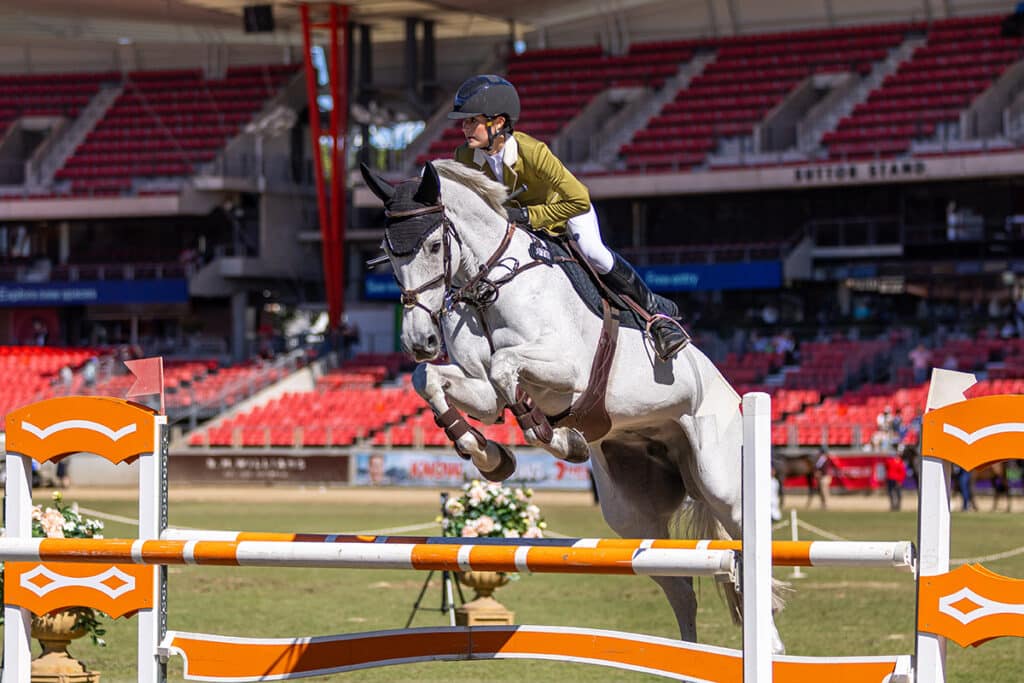
Jett and mare Wanda, who used to be an eventer for Olympian Stuart Tinney. Image by Allira Fontana Photography.
By this stage, show jumping genuinely excited Jett. What made it work was her foundation — years of Pony Club, careful flatwork, exposure to multiple disciplines and coaching that channelled her talent into correct training. The balance, feel and ability to ride a line had been built long before the big moments.
As Jett grew, her eyes increasingly turned towards following in her father Mitch’s footsteps. The idea of becoming a jockey genuinely excited her. Under the rules, she was not allowed to ride trackwork until she was 15, but Debbie was determined that Jett would be properly prepared the moment she was eligible.
Debbie was working close to home in the Hawkesbury region for well-known dressage enthusiast and Thoroughbred pre-trainer Gordon Pratt. When Jett was 14, Debbie took her to Gordon’s so she could begin riding racehorses in a controlled environment. It gave Jett an invaluable head-start, learning the balance, rhythm and “way of going” required for trackwork while still being carefully supervised.
Jett’s position and balance, already well developed through dressage and show jumping, were gradually refined into a more compact jockey style. Her feel and timing were already “home and hosed”; the focus was simply to gain time on Thoroughbreds, learning to ride them confidently, quietly and correctly. By Year 10 it was decided that Jett would leave school and pursue her riding career wholeheartedly, with the goal of becoming the best jockey she could possibly be. The journey had been deliberately designed to build strong foundations, and she had enjoyed every part of it.
THE PATIENT PRE-APPRENTICESHIP
At 15, the age at which she was permitted to ride trackwork, she began her 12-month pre-apprenticeship course with Hawkesbury trainer Claire Lever. After their pre-apprentice period, a rider is permitted to ride in official trials, where a minimum of 30 are required before progressing to race rides. Jett’s team continued their patient approach with the emphasis on a solid grounding, and she would ride about 80 trials before her first race.
The budding jockey spent about two years in the Hawkesbury area before it was decided that a country base would offer more frequent racing and less pressure from the big wigs, allowing a young apprentice to learn and develop out of the spotlight.
While Claire Lever was terrific to work with, the stable numbers were relatively small (around 15 horses in work, many of them pre-trainers), which limited opportunities to secure regular race rides. After considerable research, Jett moved to Murwillumbah in the Northern Rivers region of NSW to begin her apprenticeship with leading local trainer Matthew Dunn. He had around 85 horses in training and a strong record of premierships and country success.
The move paid off immediately. After relocating in early February, Jett had her first race rides within four weeks of starting at her home track of Murwillumbah. She had two rides — winning one and finishing second on the other — a remarkable start by any measure. Two weeks later she rode four winners in one day, a feat rarely (if ever) achieved by an apprentice so early in their career.
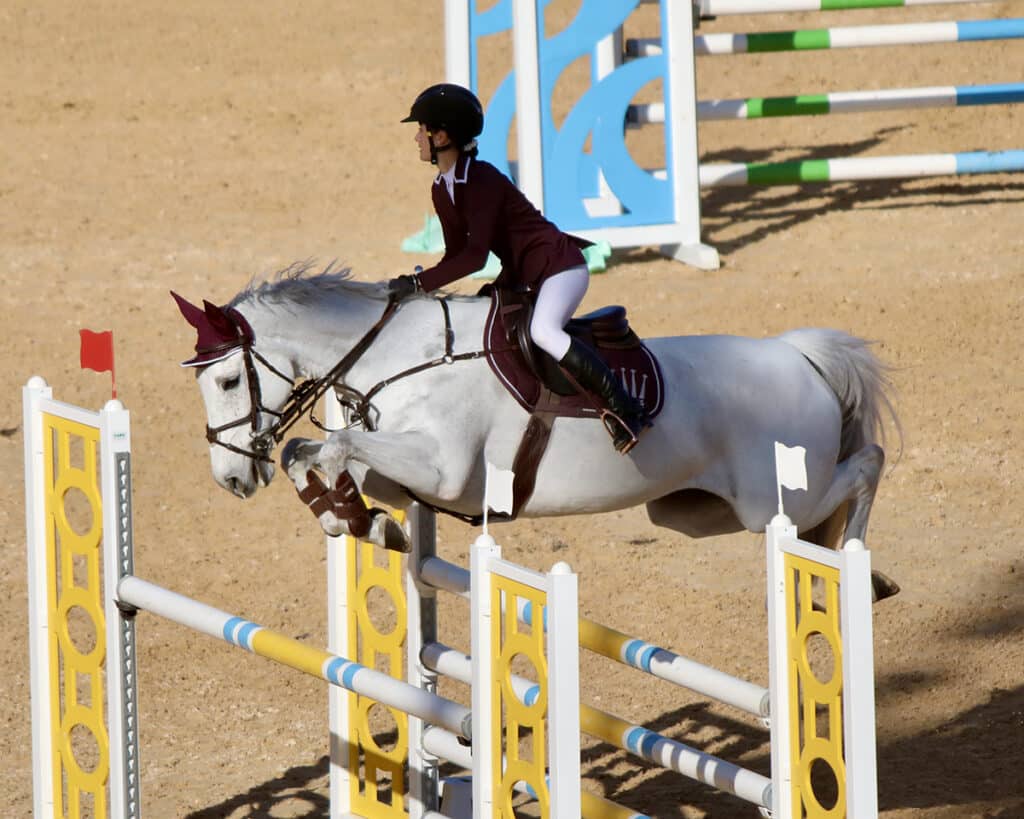
Jett competing with Wanda; Jett feels her equestrian background has greatly benefitted her skill as a jockey. Image by Roger Fitzhardinge.
Even more astonishing, Jett’s first city ride came when she took two horses by herself from Murwillumbah for her debut at Rosehill. She won on both mounts — a statement of composure, organisation and talent well beyond her years.
Even during all her successes at Pony Club, the show ring and the jumping arena, Jett says the idea of becoming a jockey was always in the back of her mind. “It was just a little ember,” she explains. “It wasn’t absolutely at the forefront of my thoughts all the time, but it was always there.”
For a while she also imagined another path. “I would have liked to be a vet, but I didn’t really have the get-up-and-go at school or the marks to do that. So the thought of becoming a jockey came more and more to the front of my mind.”
When asked if there was a particular jockey she aspired to be like, Jett’s answer is thoughtful. She certainly looks up to Jamie Kah (now Jamie Melham) — a trailblazer and one of the most successful female jockeys in the country — and she admires James McDonald, widely regarded as one of the best in the world. But for Jett, it’s not about status. “It’s not about money, fame, or accolades,” she says. “I just love riding racehorses.”
EQUESTRIAN ADVANTAGES
Jett has already shown a maturity and effectiveness that many apprentices take years to develop. She attributes this to the long, careful education her mother insisted upon. “I think my foundation that my mother put forward for me — Pony Club, showing, hacks, hunters, royal show crowds, show jumping — it’s all been a great benefit,” she says.
Jett appreciates the practical advantages that her earlier equestrian years gave her: the feel for pace, the ability to rebalance, and the instinct to organise a horse’s body through corners and lines. “The feelings I learnt riding horses on the flat — going forward and coming back, balance, correct leads, how to get a horse around the corner at speed — it’s set me up to be in a really good position at this stage.”
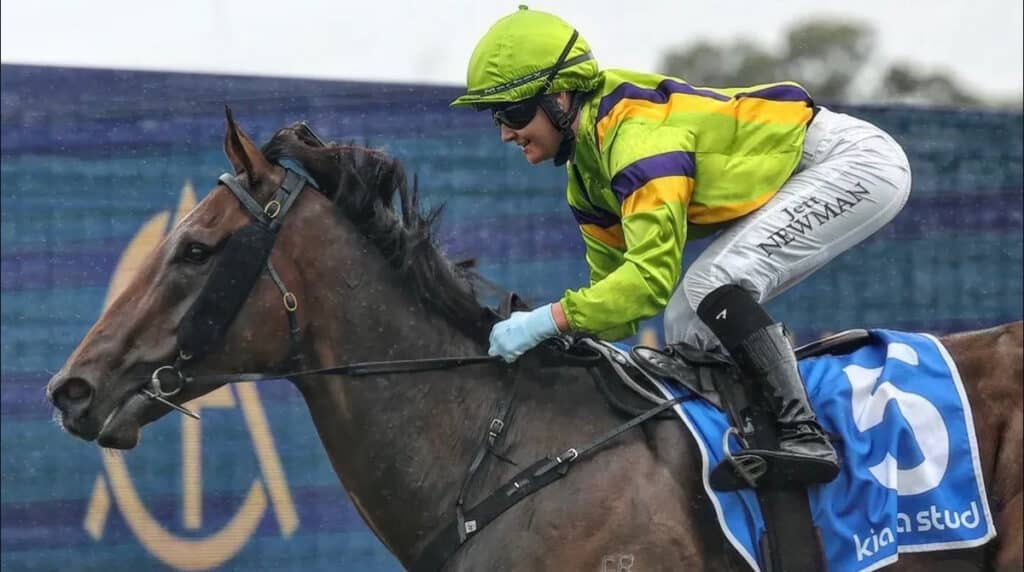
Jett has already won on the track. Image supplied.
One of the most striking aspects of Jett’s mindset is her caution — not hesitation, but patience. She speaks like someone determined to build a career properly, not to rush it. “I don’t want to go riding in town yet,” she says. “I want to feel like I’m truly ready and part of it when I get there. It’s like I don’t want to ride Grand Prix dressage when I’m really only at Elementary level,” she explains. “I don’t want to bite off more than I can chew. I want to take it bit by bit, establish the foundations I’ve been so wonderfully given, and keep building patiently and systematically to be the best jockey I can possibly be.”
Behind the wins and the headlines, Jett’s routine is unrelenting. Her mornings begin at 4:30am, she rides 10 to 15 trackwork horses before 8:30am, then stays on for stable duties — hosing, tacking up, working horses on the walker, whatever needs doing.
After that, the learning continues away from the saddle. She spends serious time studying form, watching replays, and specifically observing how the horses she’s due to ride behave in races. “That’s a really important part of my daily routine,” she says. “I watch how horses move and balance themselves during races with other jockeys, so I get a feel before I get on for how they go.”
Then it’s on the road to the races, wherever they may be, and often a long drive home to start again the next day. Races are as far away as Port Macquarie (about 430km), and she may not get home until midnight, only to be up again at 4:30am. It takes discipline, a strong brain, and a willingness to put lifestyle second. “You need early nights. You’ve got to eat well and sleep well,” she says.
Jett is also very clear that her education is ongoing and multi-sourced. Advice comes from all angles — family, trainers, experienced horse people, and the daily feedback loop that racing provides. “As far as training goes, quite often my father, my mother, and my boss will all give me advice,” she says. “Tips about how to ride certain horses, what they like, what they don’t like. It’s a great learning curve.”
And like in any elite sport, she believes progress comes from being observant and never dropping focus. “It’s about patience,” she says. “Keeping your eyes open, being observant, and never losing focus.”
When asked about her most extraordinary moment so far — one that felt like a breakthrough — Jett doesn’t hesitate. She points to the day she took responsibility well beyond what most apprentices would face early on: transporting two horses herself to Rosehill for her first city rides. It wasn’t just a “good day”, it was a statement. “To take two horses to Rosehill for my first city rides, and to win with both of them,” she says, “was quite extraordinary.”
When I ask Jett if she has a favourite racehorse, she says her very first race meeting was unforgettable: she partnered Torque of Dreams and ran second. Then in the following race she rode Without Parallel — a beautiful mare — and won. She rode her again soon after for another win, and that early partnership became something special. “It was my first race… my first win, it was also the mare’s first race and the mare’s first win,” Jett says. “And I still ride Without Parallel most days. We’ve got a fantastic connection. I have to say we look after each other. We love one another a lot. It sounds strange, but it’s true.”
When asked about what’s next for her, her answer is both confident and measured. “I’m very happy where I’m at, considering it’s almost to the day 12 months since I started race riding,” she says. “As I’ve said, I’m not in a hurry to ride at the big tracks until I really feel I’m competent and at ease — at home in that situation.
“It’s not that I’m not brave. It’s simply that I want to give myself the best chance that when I do get to the bigger races and bigger tracks, I’ll be truly prepared and won’t be out of my depth. I’ll keep chipping away at the provincial races in the area. I gain so much experience on every ride, and I’m really lucky that Matt has helped me along with so many horses to do this with.”
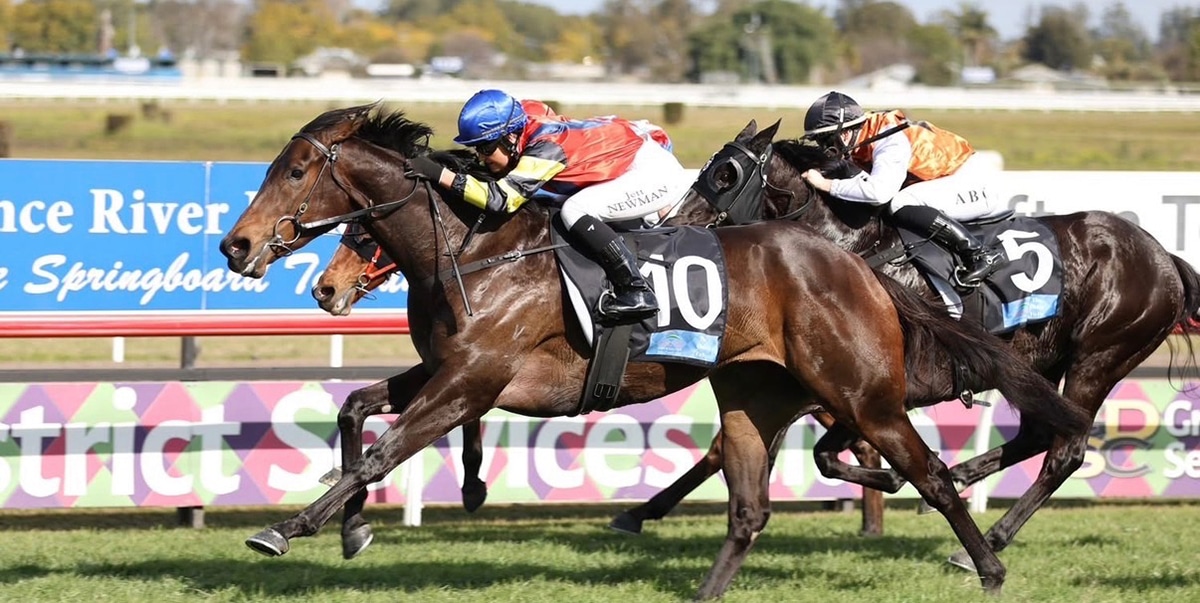
Jett racing to victory. Image supplied.
Jett speaks about her apprenticeship as a long game, a four-year education that rewards patience, consistency, and the right environment. “You don’t have to stay with the one trainer your entire apprenticeship. Even though I would love to, as I have been blessed with an amazing boss, the dream is to head to the city in the future and continue riding there and hopefully make it in Sydney.”
Jett is very aware she has been trusted with quality opportunities, and she does not take that lightly. “I have an incredible boss who has put his trust in me and supported me this entire year. I could not be more grateful for that; I’m not sure how I struck so lucky, but I am making the most of it and I am extremely appreciative of all the opportunities he has given me.”
There is no doubt Jett Newman has already created a remarkable record for only 12 months of race riding. What is most interesting is not only her physical talent, but her mental development in a sport that is as much about feel and judgement as it is about courage. That feel was built long before racing — through Pony Club, show hacks, royal show crowds, and the pressure of catch rides on unfamiliar mounts. Confidence, talent and feel are hard to manufacture quickly. Jett’s foundation has given her all three. EQ
Related articles
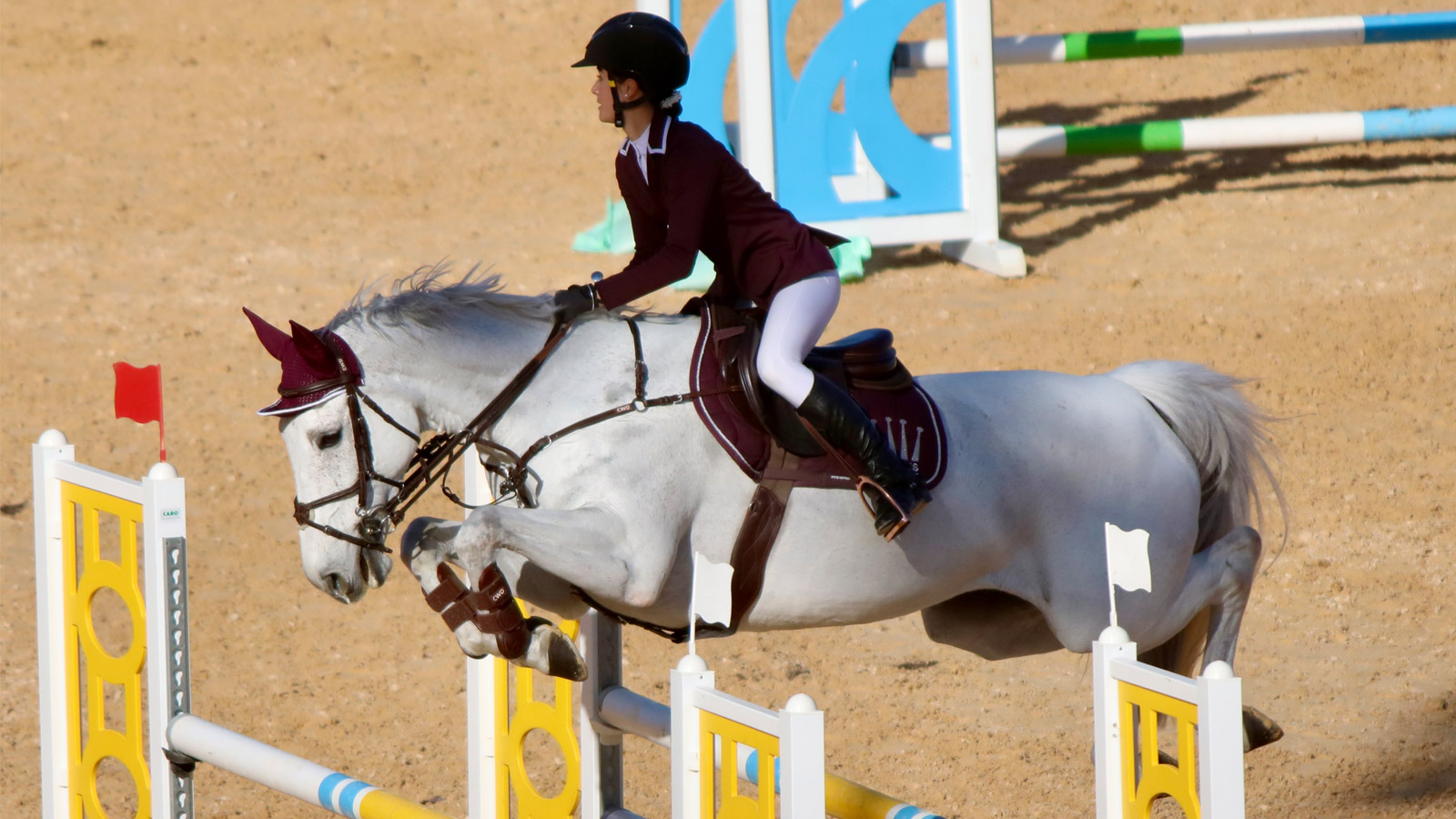
Jett Newman has shown prowess at several disciplines while waiting to become a jockey. Now that her jumping career is taking flight, however, destiny may have other plans.
Maddison Vallender emerged to the fore in Australian dressage several years ago – a young rider with natural talent, a great attitude to the sport, and a clear dedication to building her future. Taking on a bigger challenge is always her credo.